
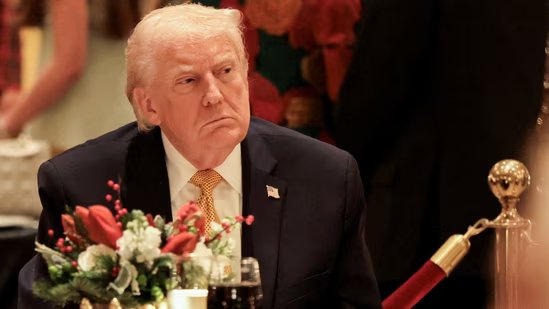
Donald Trump returned to the White House in 2025 and quickly set the tone for a year defined by regular headlines. Within weeks of his election victory and inauguration, the administration rolled out major policy actions, reopened debates over immigration and trade, and signaled a shift in how Washington would operate during his second term.
At the same time, Trump placed himself at the center of major international issues. Those foreign policy steps unfolded alongside domestic decisions that reshaped federal agencies, affected financial markets, and triggered protests in cities across the country.
As the year progressed, a mix of policy announcements, public disputes, legal scrutiny, and personal updates kept Trump in the spotlight. Below are the key moments that defined Trump’s news presence in 2025.
1. Return to the White House
Trump won the 2024 presidential election and was sworn in as the 47th president of the United States in January of 2025. In his victory remarks, he thanked voters for “the extraordinary honour” of electing him again and said, “nothing will stop me from keeping my word to you.”
In his inaugural address, Trump declared that the “golden age of America begins” with his return. He reaffirmed campaign pledges on immigration, trade, and governance, saying it would be official US policy that there are only two genders and promising what he called a colour blind society based on merit.
2. Immigration and mass deportations
Immigration became a defining focus of Trump’s second term. His administration expanded enforcement operations in major cities, carrying out workplace raids and increasing detentions as part of a broader deportation push.
Also Read: ‘Numbers will explode greatly’: How Trump plans to expand immigration crackdown in 2026
In March, Trump invoked the Alien Enemies Act of 1798 to accelerate deportations of alleged members of the Venezuelan gang Tren de Aragua. “The result is a hybrid criminal state that is perpetrating an invasion of and predatory incursion into the United States,” Trump said. In September, a federal appeals court ruled the law could not be used in this way, finding no foreign invasion.
3. Federal workforce cuts and government shutdown
By mid October, the Trump administration had dismissed more than 4,000 federal employees as a government shutdown entered its second week. The shutdown began on October 1 after lawmakers failed to pass a funding bill.
Also Read: Donald Trump embraces project 2025 amid government shutdown, promises major cuts
Trump blamed Democrats for the impasse and defended the firings as necessary pressure tactics. Federal agencies employed about two million civilian workers, making the cuts a small share of the overall workforce but a highly visible political flashpoint.
4. Nationwide protests against Trump policies
Trump’s actions sparked widespread demonstrations across the country, including more than 2,000 planned “No Kings” rallies. Protesters accused the administration of authoritarian behavior, citing immigration raids, prosecutions of political opponents, and the use of federal troops.
In Washington, demonstrators marched toward the US Capitol in scenes Reuters described as carnival-like. Trump dismissed the criticism, saying, “They’re referring to me as a king. I’m not a king,” in an interview with Fox Business.
5. Tariffs and trade policy
In April, Trump declared a national emergency over the US trade deficit and imposed sweeping tariffs under the International Emergency Economic Powers Act. He labeled the move “Liberation Day” and announced a 10 percent baseline tariff on imports from most countries.
Also Read: Full list: Donald Trump announces US tariffs on India, other trading partners
The decision triggered a global market sell-off. Trump later paused many of the tariffs for 90 days, saying the delay would allow negotiations with major trading partners.
6. Public feud with Elon Musk
Trump’s relationship with Elon Musk collapsed publicly in June over Trump’s flagship tax-and-spending bill. Musk called for Trump’s impeachment and said he would stop using SpaceX’s Dragon spacecraft after Trump proposed cutting his government contracts.
Musk accused Trump of political ingratitude and claimed his support helped Republicans win in 2024. “Without me, Trump would have lost the election,” Musk posted, later floating the idea of forming a new political party.
7. Political clash with Zohran Mamdani
Trump repeatedly traded barbs with New York City mayor-elect Zohran Mamdani until a White House meeting in midyear. Afterward, Trump praised Mamdani, saying, “We had a meeting today that actually surprised me… All things that I agree with.” Trump highlighted common ground on reducing crime, building housing, and lowering rents.
8. Suggesting Canada should be a US state
In February, Trump suggested Canada should become the 51st US state, citing trade losses of $200 billion annually. He repeated the claim in October during a meeting with Canadian Prime Minister Mark Carney, joking about a merger while acknowledging differences could be resolved.
9. Gaza ceasefire diplomacy
In October, Trump brokered a ceasefire between Israel and Hamas, ending the conflict that began in 2023. The agreement included the return of hostages and partial Israeli withdrawal. Trump proposed a US-backed “Board of Peace” to temporarily govern Gaza.
10. Russia Ukraine peace efforts
On December 24, a US-led peace proposal for Russia and Ukraine was shared by President Zelenskyy. Trump participated in the negotiations, which also included meetings with Vladimir Putin. Early talks were rocky, including a challenging White House session with Zelenskyy, before further diplomatic efforts continued.
11. Nobel Peace Prize talk
Trump lobbied for the 2025 Nobel Peace Prize, citing the Gaza ceasefire and claims of stopping other conflicts. The prize went to Venezuelan activist Maria Corina Machado. Trump’s supporters hailed his mediation efforts as justification for consideration.
12. Release of Epstein files
In December, Trump signed legislation requiring the Justice Department to release files related to Jeffrey Epstein. Thousands of documents were made public with victim identities redacted. Authorities noted Trump’s name appears in the files but stated no evidence of illegal activity.
13. Health concerns
Trump underwent a semiannual physical in October, six months after his usual checkup. The White House cited routine monitoring, noting chronic venous insufficiency discovered earlier in the year. Bandages on Trump’s hands in December sparked public speculation about his health, though officials attributed them to frequent handshakes.