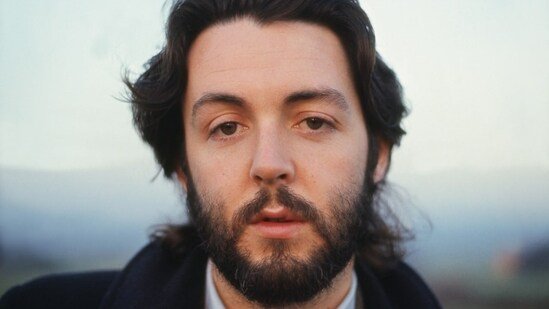
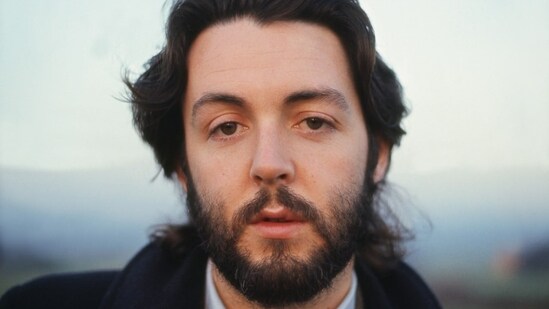
Paul McCartney emerged from the wreckage of the Fab Four in 1970, eager to ferret out a fresh sound. “I had to look inside myself, look at my world and find something that wasn’t the Beatles,” he says in “Paul McCartney: Man on the Run,” a new documentary directed by Morgan Neville.
Paul McCartney emerged from the wreckage of the Fab Four in 1970, eager to ferret out a fresh sound
He fell flat on his face, at least according to many leading critics at the time. The U.K. publication NME called McCartney’s 1971 album “Ram” an “excursion into almost unrelieved tedium.” When the singer put out “Red Rose Speedway” in 1973, the Village Voice spurned it as “possibly the worst album ever made by a rock and roller of the first rank.”
“Paul McCartney: Man on the Run” revisits this period when the former Beatle’s music was often dismissed and he was cast as a villain who drove the final nail into his old group’s coffin. Even as fans kept buying his albums, McCartney contemplated quitting music.
“I was getting slagged off by everyone, and that does make you question if you’ve still got it,” the star says in the book, “Wings: The Story of a Band on the Run,” an oral history which expands on Neville’s documentary interviews. “I did seriously consider packing it all in on a number of occasions.”
Few members of popular groups make the leap to become vital solo artists. Although a handful break big—think Michael Jackson, Beyoncé or Harry Styles—most wash out.
“There are always great challenges for members of a hugely successful group to step out on their own, and most of these are dramatically underestimated by the artist,” said Barry Weiss, founder of Records, a label that is a joint venture with Sony Music. “Unless the leaving member has a unique point of view and specific direction artistically, the odds are high that they will fail.”
Neville, who won an Oscar directing a documentary about backup singers, “20 Feet From Stardom,” hoped to understand how McCartney battled those odds. “I know there were missteps along the way,” Neville said. “I give Paul complete credit, because he let me 100% make the film I wanted to make.” McCartney is one of the movie’s executive producers.
Some of the venom aimed at the star in the early 1970s was less about his music and more about his politics—or lack thereof. By the end of the previous decade, rock had become self-serious; many listeners expected artists to engage with the urgent issues of the day.
In contrast, McCartney was largely writing “songs about how much he loved [his wife] Linda and how cool their life was,” said Peter Ames Carlin, the author of “Paul McCartney: A Life.” Some critics sneered at these topics as “f—ing bourgeois,” Carlin continued.
Linda, who died in 1998, was credited along with Paul on “Ram” in 1971. When he formed the band Wings, she played keyboards, sang and co-wrote songs for several years.
Wings debuted with “Wild Life” in December 1971, less than 12 months after McCartney sued the rest of the Fab Four to dissolve their contractual partnership. While this was more the final step in a drawn-out, painful process of separation than the decisive blow, “everyone was saying I broke up the Beatles,” he says in the documentary. “I kind of bought into it.”
Still, McCartney kept recording. He frequently took a shoot-from-the-hip approach in the studio, reveling in “the freedom of not having to answer to anyone else,” as Neville put it: “Paul’s whole thing is the madcap idea is often the brilliant idea.”
But several of those madcap ideas flummoxed fans—Carlin pointed to the 1972 single “Mary Had a Little Lamb,” which was inspired by the nursery rhyme. The oral history includes McCartney’s defense of that track: “The truth is, it was catchy.”
Yet even his closest collaborators had occasional doubts about the work they were doing with McCartney during this period. In a 1976 interview, Linda described “Red Rose Speedway” as “a non-confident record.”
“Something was missing,” she added. “We needed a heavier sound.”
They found it during recording sessions for the album “Band on the Run,” the melody-drunk highlight of McCartney’s 1970s discography. There were unmistakable echoes of his old group in the whirlwind medley of the title track and the honey-dripping ballad “Bluebird.”
“Band on the Run” was “about 4,000% better than anything that anybody at the time considered McCartney capable of producing,” Charles Shaar Murray wrote in NME. “Suddenly Paul McCartney was the golden boy again.”
“Paul McCartney: Man on the Run” is streaming now on Prime Video.