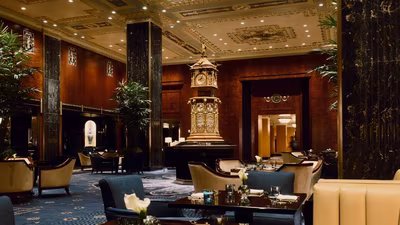
The Chinese owners of the famed Waldorf Astoria in New York City are preparing to put the hotel up for sale, only months after it reopened following a multibillion-dollar, much-delayed overhaul.
The Waldorf Astoria’s renovation was completed last year about five years behind schedule and more than $1 billion over budget.
A company controlled by the Chinese government is expected to begin marketing the hotel as soon as next month through the real-estate investment bank Eastdil Secured, according to people with knowledge of the plans.
The historic hotel, which occupies a full city block on Park Avenue in Midtown Manhattan, reopened this past fall after an eight-year gut renovation that created a smaller hotel with 375 guest rooms and 372 condominium units for sale. The Waldorf’s adjoining restaurants, shops and other amenities would be included in a sale, but the condos would continue to be sold separately.
The Waldorf’s transformation was completed last year about five years behind schedule and more than $1 billion over budget. Developers and real-estate executives say it was the most complicated and likely the most expensive real estate conversion ever attempted in the U.S.
While Hilton, which has a 100-year management contract for the hotel, doesn’t disclose financial data for the property, the Waldorf is coming to the market at a time when the luxury hotel market is hot.
New York City’s luxury lodging sector commanded average daily rates of more than $580 last year and revenue per available room of more than $450, according to data firm CoStar. Both those figures were all-time highs.
A Chinese reinsurance firm bought the 1,400-room Waldorf Astoria in 2014 for $1.95 billion, in one of the most expensive hotel sales ever. Additionally, the owners spent more than $2 billion on construction costs for a total cost of more than $4 billion.
The seller doesn’t expect to get all its costs back on a sale, people familiar with the matter said. But with an expected billion-dollar-plus price tag, only a small cadre of potential buyers would be able to afford the flagship property for Hilton’s Waldorf luxury brand.
Middle Eastern and Asian sovereign funds and other foreign governments could be potential buyers, according to people familiar with the matter. Qatari government funds already own the famed St. Regis Hotel and Plaza Hotel in Manhattan.
But a sale of the Waldorf would be part of a recent wave of Chinese property owners steadily pulling out of the U.S. market. Those sales have continued as political tensions with the U.S. intensified.
Anbang Insurance Group Chief Executive Wu Xiaohui bought the Waldorf Astoria hotel in 2014, as Chinese investors took advantage of new rules in China allowing them to more easily buy real estate and make other investments abroad. These buyers didn’t mind paying top dollar, U.S. property analysts said, because they sought trophy buildings that would appreciate in value for years.
The Chinese government took over Wu’s company and installed state-run Dajia Insurance Group to handle its assets, including the Waldorf. That meant government officials in Beijing were now in charge of the renovation.
The Chinese government kept pouring in money and pushing ahead, even as it weighed a potential sale or taking on a partner, according to people familiar with the project. It now owns the property through a limited liability company.
In addition to the Waldorf Astoria, the Chinese government company has hired Eastdil to market a dozen luxury hotels in the U.S. that are part of what is known as the Strategic Hotels & Resorts portfolio. The collection includes the J.W. Marriott Essex House near Central Park in Manhattan and the Four Seasons in Washington, D.C.