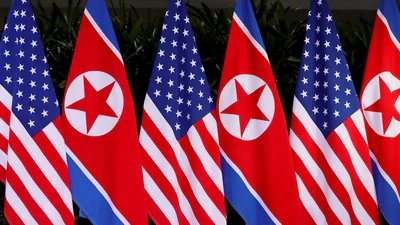
The Trump administration plans to approve international aid deliveries to North Korea, opening the door for humanitarian assistance after a monthslong freeze during which dictator Kim Jong Un deepened ties to Russia and China.
The Trump administration plans to approve international aid deliveries to North Korea
All humanitarian aid to North Korea requires special permission from a United Nations sanctions committee, where the U.S. has frozen approvals for months because of concerns about the diversion of aid supplies. The U.S. will now release any holds on sanctions exemptions, according to people familiar with the matter, paving the way for international assistance.
Over the past year, Kim has sent North Korean troops to fight for Russia in its Ukraine war, met Chinese leader Xi Jinping and Russian President Vladimir Putin, rebuffed calls for nuclear disarmament, and ignored a pitch by President Trump for a face-to-face meeting.
A resumption of aid approvals won’t necessarily improve contacts with the Kim regime, which has shown a lack of interest in engaging with the U.S. or South Korea in recent years, despite Trump’s overtures and the election last year of South Korean President Lee Jae Myung, who has sought to improve ties with Pyongyang.
In 2024, North Korea rejected international aid for floods that displaced thousands. North Korea’s rejection of any aid from South Korea brought cross-border humanitarian assistance to zero last year for the first time in three decades.
South Korea saw the U.S. move to allow aid as a gesture of goodwill that could serve as a starting point for engagement with North Korea, a South Korean official said.
A U.S. official familiar with the move said the U.S. decision to let aid deliveries resume wasn’t designed as a gesture to North Korea. The Trump administration is completing an aid review that functioned as a de facto block on aid to North Korea, the official said.
The White House didn’t immediately respond to a request for comment.
Humanitarian exemption requests for North Korean aid have been on hold since July, according to a report by the National Committee on North Korea, a Washington, D.C.-based nongovernmental group that serves as an advocate for aid groups doing work in North Korea.
The group said Russian humanitarian organizations were increasingly filling roles traditionally held by U.S. groups and described the freeze as a lost opportunity to build trust between the U.S. and North Korea.
U.N. sanctions against North Korea for its nuclear and weapons programs don’t explicitly ban humanitarian aid. International aid workers left North Korea during the Covid pandemic and have struggled to resume operations in the country.
The head of the Food and Agriculture Organization’s trip to Pyongyang in July 2024 was the last known visit to the country by U.N. humanitarian officials.