
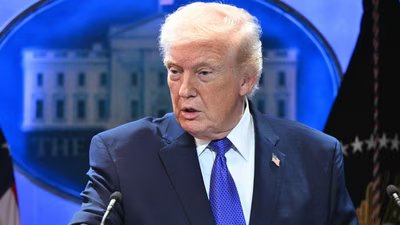
US President Donald Trump on Friday moved quickly to replace tariffs invalidated by the Supreme Court, announcing a temporary 10% global import duty for 150 days while launching new investigations under other statutes that could pave the way for fresh trade levies.
Trump wrote on Truth Social, “It is my Great Honor to have just signed, from the Oval Office, a Global 10% Tariff on all Countries, which will be effective almost immediately”.
Speaking at a briefing earlier, Trump said he was invoking Section 122 of the Trade Act of 1974 to impose new tariffs that would be layered on top of duties still in force.
The move is intended to partly offset the 10% to 50% tariffs previously enacted under the 1977 International Emergency Economic Powers Act (IEEPA), which the court struck down, Reuters reported.
Also Read | ‘We are not paying tariffs to them, they are’: Trump on trade with India after SC ruling on sweeping tariffs
What is happening?
Treasury Secretary Scott Bessent said the new 10% duties, along with potential tariff increases under Section 301, which addresses unfair trade practices, and Section 232, which covers national security, would keep overall tariff revenues largely unchanged in 2026.
“We will get back to the same tariff level for the countries. It will just be in a less direct and slightly more convoluted manner,” Bessent told Fox News, adding that the Supreme Court’s decision had weakened Trump’s negotiating leverage with trading partners.
Section 122, a never-before-used authority, allows the president to impose tariffs of up to 15% for a maximum of 150 days to address “large and serious” balance-of-payments problems. The provision does not require formal investigations or extensive procedural steps. Any extension beyond 150 days would require congressional approval.
“We have alternatives, great alternatives,” Trump said. “Could be more money. We’ll take in more money and we’ll be a lot stronger for it.”
While legal challenges to the new tariffs are likely, the limited duration of Section 122 duties means they could expire before courts reach a final ruling, said Josh Lipsky of the Atlantic Council.
Trump also said his administration was initiating new country-specific probes under Section 301 of the Trade Act of 1974 “to protect our country from unfair trading practices of other countries and companies.”