
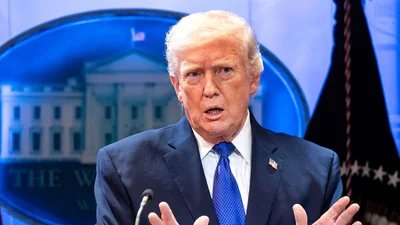
Indian-American lawyer Neal Katyal, who spear headed the legal fight that led to US Supreme Court’s ruling striking down President Trump’s reciprocal tariffs, has questioned the latter’s decision to impose a 15 per cent global tariff, arguing that sweeping levies should be approved by Congress rather than imposed through executive action.
ALSO READ | Trump raises global tariffs to 15%: What it means for India
In a post on X, Katyal said the administration’s reliance on Section 122 of the Trade Act of 1974 to justify the tariff is legally questionable, particularly in light of arguments previously made by the US Department of Justice (DOJ).
ALSO READ | What products are exempted from Donald Trump’s new 10 per cent tariff? Explained
“Seems hard for the President to rely on the 15 percent statute (sec 122) when his DOJ in our case told the Court the opposite: “Nor does [122] have any obvious application here, where the concerns the President identified in declaring an emergency arise from trade deficits, which are conceptually distinct from balance-of-payments deficits.” If he wants sweeping tariffs, he should do the American thing and go to Congress. If his tariffs are such a good idea, he should have no problem persuading Congress. That’s what our Constitution requires,” he wrote in his post.
This comes after a landmark Supreme Court ruling that struck down most of Trump’s earlier tariffs imposed under the International Emergency Economic Powers Act (IEEPA) of 1977, holding that the administration had exceeded its authority and that the power to levy taxes lies primarily with Congress.
ALSO READ | ‘Modi was ripping us off’: Trump after big praise on India deal amid tariff blow
Following the ruling, Trump lashed out at the justices within hours, calling them “fools and lapdogs” and alleging that the court was influenced by foreign interests. He also announced a fresh 10 per cent global tariff under Section 122, later increasing it to 15 per cent, calling it the “fully allowed and legally tested” level, effective immediately, as per news agencies.
(With inputs from agencies)