
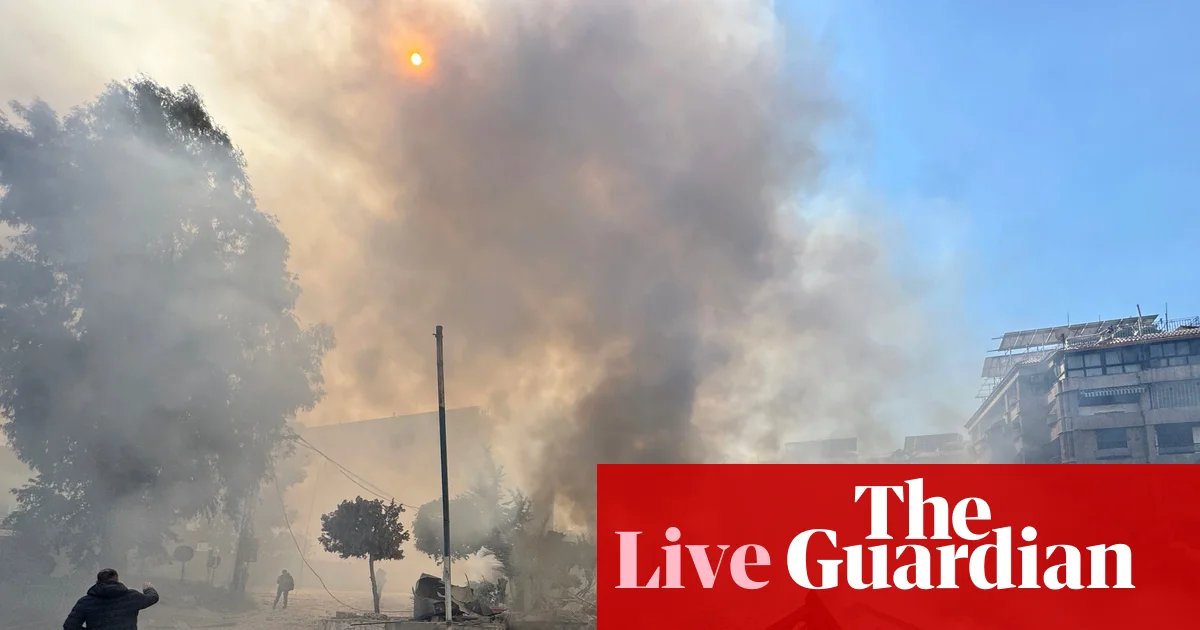
The US navy could begin escorting oil tankers through the strait of Hormuz if necessary, president Donald Trump said on Tuesday, in one of the administration’s most aggressive steps yet to attempt to contain soaring energy prices sparked by the US-Israel war with Iran.
As the escalating conflict in the Middle East has raised risks to shipping through key waterways, Trump said that he had ordered the US international Development Finance Corporation (DFC) to provide political risk insurance and financial guarantees for maritime trade in the Gulf.
Global crude prices have spiked since Israeli and US forces began striking Iran over the weekend, leading to fighting that has interrupted Middle East oil tanker shipments.
Ship owners and analysts were uncertain that military escorts and insurance backstopping by the DFC would be enough to stop rising prices, however. The DFC, launched in 2019, is a government agency that partners with private investors to support projects in developing countries.
Trump has made lower fuel costs for Americans central to his economic messaging, and the move signals a willingness to use financial and military tools to prevent disruptions to global crude supplies.
“No matter what, the United States will ensure the free flow of energy to the world,” Trump said in a social media post.
Key events
-
Closing summary
-
UAE says it was exposed to over 1,000 attacks from Iran
-
Fire near US embassy in Dubai
-
Trump says US Navy to escort tankers through Strait of Hormuz ‘if necessary’
-
France sending only aircraft carrier to Mediterranean and further defences to Cyprus, Macron says
-
British F-35 jets shoot down drones over Jordan, Iraq and Qatar
-
Israeli military says it struck a compound in Iran operated to develop capabilities for nuclear weapons
-
US military says it has hit more than 1,700 targets since beginning of operation against Iran
-
Israel says it killed commander of Iran’s Quds Force in Lebanon
-
The day so far
-
Trump says he is ‘not happy’ with UK and ‘cuts off’ all trade with Spain over Iran
-
Trump insists Israel did not force US hand and repeats claim Iran was going to attack first
-
IDF claims to have struck building housing Iran’s Assembly of Experts – report
-
IDF announces more strikes on Tehran
-
Tens of thousands of people left stranded in the Middle East as conflict complicates routes home
-
UK considering sending warship to Cyprus to defend RAF airbase
-
Interim summary
-
UAE air defences tallied 186 missiles, 812 drones launched toward country since start of conflict
-
Drone crashes near Salalah port in Oman
-
Amid soaring energy prices, QatarEnergy to halt production of some downstream products
-
Iran’s women’s team decline to sing national anthem before Asian Cup tie
-
At least 30,000 displaced in Lebanon, UN says
-
IAEA confirms damage to Iran’s Natanz nuclear site
-
Iranian Red Crescent updates death toll to 787
-
Albanese working with UAE over Australians stranded because of flight disruptions
-
State media: Oman port targeted in suspected drone strike
-
Israel accuses Spanish prime minister of being on wrong side of history
-
Trump criticises Starmer, laments US-UK relationship in interview with The Sun
-
IDF positions soldiers in southern Lebanon
-
Israel’s Iran war brings new Gaza siege that threatens hunger crisis
-
Interim summary
-
US orders ‘non-emergency’ staff to leave Qatar and Kuwait
-
US orders ‘non-emergency’ staff to leave Bahrain, Jordan and Iraq
-
Iran claims attack on US air base in Bahrain
-
US claims to have destroyed Iranian Revolutionary Guards’ command facilities
-
Opening summary
This live blog has now closed. You follow our continuing coverage of crisis in the Middle East here.
Closing summary
Thank you for tuning into our live coverage of the war in Iran and its regional ramifications. Here is a quick recap of what has happened today:
-
Donald Trump has attempted to counter a simmering anti-Israel backlash in Congress and among his own Maga supporters by denying suggestions that he had been forced into attacking Iran because Israel had already decided to do so. Asked whether Israel had pushed him into launching military action, Trump told reporters: “No. I might have forced their hand.”
-
The US military has claimed that the first 24 hours of the operation in Iran was nearly double the scale of the first day of the “shock-and-awe” strikes on Iraq in 2003. American forces have struck nearly 2,000 targets so far in Iran “as part of the largest firepower buildup in the region in a generation,” Admiral Brad Cooper of US Central Command has said.
-
The US military has destroyed 17 Iranian ships, including a submarine, and struck nearly 2,000 targets in Iran, the commander of the US Central Command said on Tuesday.
-
Global oil and gas prices have spiked as the US-Israeli war on Iran has halted energy exports from the Middle East, with Tehran attacking ships and energy facilities, closing navigation in the Gulf and forcing production stoppages from Qatar to Iraq.
-
The conflict has caused turbulence on global markets. In Tokyo, the Nikkei 225 continued to fall on Wednesday, and was down about 1.7% during early trading. In Seoul, the Kospi – which dropped 7.2% on Tuesday – fell by a further 3.1% at the open. But Wall Street looks set to open flat in New York, according to pre-market trading data.
-
The US navy could begin escorting oil tankers through the strait of Hormuz if necessary, president Donald Trump said on Tuesday, in one of the administration’s most aggressive steps yet to attempt to contain soaring energy prices sparked by the war.
-
The Iranian Red Crescent Society said at least 787 people had been killed since the conflict began. The worst mass casualty event of the US-Israeli military assault so far has been the direct strike on a girls’ elementary school in Minab on Saturday, which killed up to 168 people. You get a sense of the devastation through our visual guide, here.
-
At least 30,000 people have been displaced in Lebanon, according to the United Nations, following heavy Israeli airstrikes in the country.
-
Israel said it has launched a ‘broad wave’ of strikes on Iran that were targeting launch sites, defense systems, and additional Iranian infrastructure.
-
Trump also said he was upset with British prime minister Keir Starmer, who has not joined the US-Israeli attack on Iran but did let US forces use UK bases. “I’m not happy with the UK,” the US president said. “It’s taken three, four days for us to work out where we can land,” Trump said. Referring to Starmer, he added: “This is not Winston Churchill that we’re dealing with.”
-
Canadian prime minister Mark Carney called on Wednesday for the rapid de-escalation of the conflict unleashed by US-Israeli strikes on Iran, urging all parties to respect the international rules of engagement.
Qatar, which hosts a major US military base and has been targeted by multiple Iranian strikes since the outbreak of the war, reported after midnight Wednesday that it had dismantled two spy cells linked to Iran’s Revolutionary Guards.
Ten suspects were arrested who “admitted during the investigation their links to the Revolutionary Guards and having been instructed to conduct espionage and sabotage activities,” the nation’s official press agency said.

Jonathan Yerushalmy
The US military has claimed that the first 24 hours of the operation in Iran was nearly double the scale of the first day of the “shock-and-awe” strikes on Iraq in 2003.
American forces have struck nearly 2,000 targets so far in Iran “as part of the largest firepower buildup in the region in a generation,” Admiral Brad Cooper of US Central Command has said.
“We have severely degraded Iran’s air defenses and destroyed hundreds of Iran’s ballistic missiles, launchers and drones,” Cooper said, adding that the US will “continue with 24/7 strikes into Iran.”
In March 2003, the US hit Iraq with more than 1000 strikes as it began the invasion that would eventually topple the government of Saddam Hussein. The “shock and awe” bombing campaign flattened the regime’s infrastructure in and around Baghdad and laid the groundwork for the military’s ground assault.
The Trump administration plans to meet with executives from the biggest US defence contractors at the White House on Friday to discuss accelerating weapons production, as the Pentagon works to replenish supplies after strikes on Iran and several other recent military efforts, five people familiar with the plan told Reuters.
Companies including Lockheed Martin and Raytheon parent RTX, along with other key suppliers, have been invited to attend the meeting, the people said, speaking on condition of anonymity because the discussions are private.
The meeting underscores the urgency felt in Washington to shore up weapons stocks after the Iran operation drew heavily on munitions.
At least 30,000 people have been displaced in Lebanon, according to the United Nations, following heavy Israeli airstrikes in the country. Thousands of Syrians have crossed the border to their home country, many of whom had fled to Lebanon during the civil war
See this video for on the ground scenes.

Callum Jones
Global markets look set for another turbulent day.
In Tokyo, the Nikkei 225 continued to fall on Wednesday, and was down about 1.7% during early trading. In Seoul, the Kospi – which dropped 7.2% on Tuesday – fell by a further 3.1% at the open.
But Wall Street looks set to open flat in New York, according to pre-market trading data.
With all eyes still on the Strait of Hormuz – one of the most important arteries for global trade, which has been in effect closed by Iran – oil prices will also be in focus later after Donald Trump suggested the US could begin escorting tankers.
Donald Trump has attempted to counter a simmering anti-Israel backlash in Congress and among his own Maga supporters by denying suggestions that he had been bounced into attacking Iran because Israel had already decided to do so.
Amid growing criticism among opponents and allies alike, Trump rebuffed claims that he had struck Iran only because Israel had forced his hand, a suspicion fuelled by comments made by Marco Rubio, the secretary of state.
Asked whether Israel had pushed him into launching military action, Trump told reporters: “No. I might have forced their hand.”
Read the full report here:
The Central Intelligence Agency’s station at the US embassy in Saudi Arabia was hit on Monday by a suspected Iranian drone, a source familiar with the matter told Reuters on Tuesday.
There is no indication the station was the target, the source said. The CIA declined to comment.
The attack came amid ongoing strikes in the Middle East following Saturday’s US and Israeli attacks on Iran.
The embassy, which is located in the Saudi capital of Riyadh, is among the US sites that have been hit so far in the conflict. Saudi Arabia’s defense ministry said the embassy was hit by two drones, which resulted in a limited fire and some material damage.
The US military has destroyed 17 Iranian ships, including a submarine, and struck nearly 2,000 targets in Iran, the commander of the US Central Command said on Tuesday.
“Today, there is not a single Iranian ship underway in the Arabian Gulf, Strait of Hormuz, or Gulf of Oman,” U.S. Central Command’s Brad Cooper said in a video posted to X.
Canadian prime minister Mark Carney called on Wednesday for the rapid de-escalation of the conflict unleashed by US-Israeli strikes on Iran, urging all parties to respect the international rules of engagement.
Speaking in Sydney, Carney said the war in the Middle East represented “another example of the failure of the international order”.
“Canada calls for a rapid de-escalation of hostilities and is prepared to assist in achieving this goal,” he said.
“Canada reaffirms that international law binds all belligerents,” he said.
The Pentagon has released the names of four of the six service members who have been killed in the Iran war, saying they died in a drone strike in Kuwait.
All four Army Reserve soldiers were killed Sunday when a drone hit a command centre in Port Shuaiba, Kuwait. That was just a day after the US and Israel launched its military campaign against Iran, which has launched retaliatory strikes.
The soldiers, assigned from the 103rd Sustainment Command in Des Moines, lowa, were:
-
Capt. Cody A. Khork, 35, of Winter Haven, Florida
-
Sgt. 1st Class Noah L. Tietjens, 42, of Bellevue, Nebraska
-
Sgt. 1st Class Nicole M. Amor, 39, of White Bear Lake, Minnesota
-
Spc. Declan J. Coady, 20, of West Des Moines, lowa.