When you are interrogated at Evin prison in Tehran, recalls Jafar Panahi, you are blindfolded and placed on a chair facing a wall. The interrogators are behind you, and you answer their disembodied questions on paper, lifting the blindfold to write. Their voices are “the only way you can know them”. The political prisoner starts wondering: “Are they young, are they old?”
Les Films Pelleas
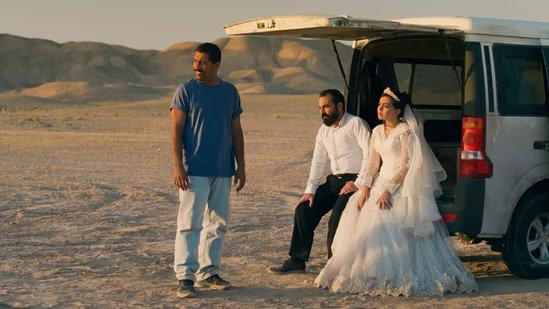
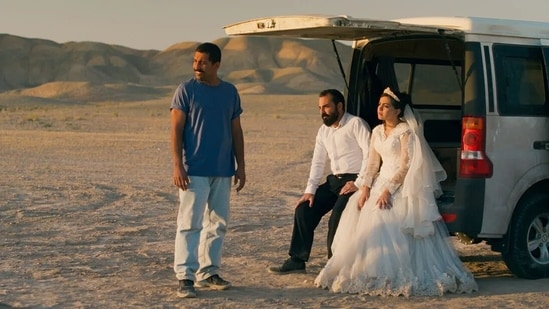
Mr Panahi, one of Iran’s best known film-makers, has been locked up twice. He drew on his experiences, and those of other inmates, in “It Was Just An Accident” (pictured), which is up for two Oscars at the ceremony on March 15th; it won the top prize at last year’s Cannes Film Festival. The haunting movie, and Mr Panahi’s career, epitomise the eternal stand-off between artists and authoritarians. It is an unequal contest—camera and pen against bullet and noose—but not in the way it might seem.
In the film, a family’s car breaks down after hitting a dog. Vahid, a local labourer played touchingly by Vahid Mobasseri, suspects the driver (Ebrahim Azizi) is the goon who tortured him behind bars. To make certain, Vahid binds and gags the man in his van and seeks confirmation from other survivors, among them a woman posing for wedding photos, a lucid photographer and her hothead ex-boyfriend. To identify him they rely on the squeak of his artificial leg, the tang of his sweat and contours of his skin; traces of the gruesome, sightless intimacy between torturer and victim.
The result is a visceral thriller, propelled by the twin mysteries of whether the ragtag crew have the right man and what they will choose to do with him. But it is also an absurdist caper. “Waiting for Godot” is namechecked when they park in a desert, beside a blasted tree, and quarrel over the captive’s fate. What, viewers may wonder, is the accident in “It Was Just An Accident”: the car hitting the dog, the driver’s run-in with Vahid, or the whole predicament of living under a brutal, capricious regime?
At heart, this is an inquiry into responsibility and justice under—or after—tyranny. The interrogator is merely a cog in the system, a character argues. “These scumbags created the system!” another counters. “We aren’t killers,” says one. “We’re not like them.” Others crave revenge. Ultimately the story is hopeful: because it imagines, allegorically, a time of moral reckoning, and because it insists on the humanity even of its villain. As Mr Panahi puts it on a visit to London, the central question is, “Shall we stop the cycle of violence, or shall we allow it to continue?”
Outside the city, Vahid and his comrades are safe. Carting a kidnapped torturer around Tehran is much riskier. In this the characters’ quirky odyssey reflects the peril of Mr Panahi’s unlicensed crew. They shot the passages in the desert first, he explains from behind his signature dark glasses, plus the interiors and sequences in the van. Only then did they tackle the more exposed street scenes—which the police duly interrupted.
He is used to improvising. As well as his months-long stints in prison, which included a spell in solitary confinement and a hunger strike, he has previously been banned from travelling abroad and from making movies. In response, with ingenious defiance, he shot a film in his flat and called it “This Is Not A Film”. He drove a taxi around the city—driving was his only other skill, he jokes—recording the passengers inside it. The upshot was the inimitable “Taxi Tehran”.
You either look for alternative work or “find a way to continue”, Mr Panahi says of the prohibitions he has faced. If you are determined to keep going, “the solution comes to you.” Sticking with his medium is a message in itself: “It’s a way of standing up to power.”
This resilience and enterprise may soon be called on again. In his absence abroad, Mr Panahi has been sentenced to a year in prison. (Mehdi Mahmoudian, a collaborator on the Oscar-nominated screenplay, has been briefly banged up, too.) Nevertheless Mr Panahi plans to return to Iran after the Academy Awards. “It’s my country,” he says simply.
The recent slaughter of protesters shows the regime has reached “a dead end”, he thinks. In any case, if people want to stop him making movies, “that’s their problem, not mine. I’ve made my choice.” Past efforts to thwart Mr Panahi have not just failed but backfired, his punishments transmuted on screen into drama and dignity. After all, if he hadn’t been sent to Evin, “I may never have made this film.” With all their tools of repression, in this unequal struggle with the artist, the strongmen are doomed.
For more on the latest books, films, TV shows, albums and controversies, sign up to Plot Twist, our weekly subscriber-only newsletter