
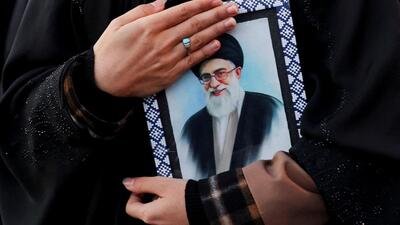
Iran’s Supreme Leader Ayatollah Ali Khamenei’s killing in a joint Israeli-American attack on Saturday marks geopolitical aggression of the sort the world has not seen in a long-long time. It is perhaps also the beginning of a new crest – difficult to say how long-lasting — of military hostilities in the West Asian region. Severe economic ripple effects will perhaps follow, given its criticality to global energy supplies. Experts and commentators will continue to weigh-in on the specificities of the fault-lines involved and how they change from here, but it is important to keep in mind the overall state of play which led to this moment and what it entails for India.
1. The proliferation of conflict in the last few years is unprecedented: There are conflicts galore in large parts of the world today. You have the Russia-Ukraine war in Europe, which just entered its fifth year. In Latin America, the US staged a surgical strike to dispose Hugo Chavez’s successor and is now eyeing a regime change in Cuba. Small-scale hostilities between gunboats continue. Mexico has perhaps started a long-drawn war with drug cartels. South Asia, which saw a multi-day conflict between India and Pakistan last year, continues to see an armed insurrection against a military junta in Myanmar and is now witnessing a full-blown war between Pakistan and Afghanistan. West Asia has seen almost non-stop hostility since Hamas attacked Israel in the October of 2023. The latest escalation in Iran is best seen as an extension of this conflict. We might not have a World War III, but large parts of the world are not very far from an ongoing war either.
2. Trump 2.0 has muddied the conflict waters, but did not create most of them: Donald Trump’s second presidency unleashed economic chaos on the world with its trade wars. It has also created unprecedented disruption in the US body politic. But it will be unfair to blame it alone for the proliferation of military conflicts. The Ukraine war started because NATO thought it could continue to corner Russia without provoking a response. Hamas’s 2023 attack, while unambiguously despicable and barbaric, must be seen as the result of a botched-up peace process between Israel and Palestine where the former pretty much violated every commitment it made in international accords. To be sure, Trump 2.0 has resurrected the fires of US military campaigns in Latin America, but the fire, so far, has been contained, and not a lot of people are losing sleep over it, unlike the conflicts in Europe and West Asia. The more important point is that anyone claiming the moral high ground over the latest chaos is more likely grandstanding opportunistically than being earnest. There are no heroes here.
3. Trump’s US has taken very different approaches to the war in Europe and West Asia: Trump’s philosophy, as far as dealing with the two conflicts is concerned, seems to be motivated by crushing the weaker devil but courting the stronger one. All indications, including the Omani foreign minister’s televised comments suggest that Iran was interested in a negotiated settlement, but the US had made up its mind to attack it. The military build-up was already happening. Iran, given its already dilapidated military and political capabilities after last year’s strike does not pose much of a threat to the US unlike Russia where Putin has been playing poker with Trump for a long time now. What has probably worked for Putin is not just his nuclear arsenal but also the promise of letting Trump and his friends monetize some of Russia’s natural resource wealth. Of course, Trump also wants to signal to NATO’s European allies that they should foot more of the military bill which US pays for at the moment.
4. At the heart of the US’s double-speak on conflicts in Europe and West Asia are differentiated political economy dividends for it: An Arab oil embargo following Israeli aggression in the 1970s brought the capitalist world to its knees via inflation and changed the course of global capitalism forever. This is what made when West Asia sneezes, capitalism goes on ventilator the geo-economic dictum for decades. Not anymore. With the US now self-sufficient in petroleum and even eyeing exports the dictum does not hold for Trump. If oil prices go up indeed because Strait of Hormuz traffic is disrupted due to commercial (insurance payments) or military factors, Trump and his shale gas pumping friends will make rather than lose money at the expense of others. What sweetens this economic calculus is the political weaponisation of the anti-anti-Semitism campaign in the US which Trump exploited to the hilt during the elections. Of course it also brings a lot of money to the US military-industrial complex. The Israeli cause, in other words, is the only freedom worth being defended for Trump and his comrades. The ghosts of Cold War now only haunt American allies on the other side of the Atlantic who won the war but have lost the peace as they face economic stagnation via Chinese strangulation and democratic discontent thanks to rapidly breaking down economic and cultural contracts with the state.
5. Different does not mean lack of dissidence for Trump’s geopolitics: Trump, so far, has aced the art of cultivating constituencies to pit them against his enemies and washing his hands off any collateral damage which occurs. His embrace of MAGA to browbeat the neoconservative stranglehold over the old Republican Party establishment and then resurrecting the Donroe doctrine is the perfect example. His trade policy is no different. While the American elite have almost felt paralysed against this tactic, this does not mean that Trump does not or will not face any opposition. Sentiment vis-à-vis Israel is perhaps at its worst in the US and most European countries today thanks to the disproportionate and brutal destruction it has inflicted in Gaza. Trump’s tariffs have made the cost-of-living crisis worse and burnt his ‘bromance’ with even some conservative judges in the US Supreme Court, including the Chief Justice. His regime has also declared war against the US Federal Reserve, the custodian of dollar dominance in the world at a time when US’s fiscal position is the worst it has ever been. Even a limited setback will entail a body blow to Trump . His most important challenge, will of course, come in the midterms scheduled for later this year. To use a wicked analogy, Trump seems to be winning the Blitzkrieg, but his fate in the larger war remains uncertain.
6. Hedging requires more than equivocation today: If the stakes were not so high, it would be comical. The “middle-powers”, to borrow a term the Canadian Prime Minister used while attacking Trump, abuse Trump over esoteric or self-suiting issues but side with him in crunch situations such as in West Asia. Countries such as India, while emphasizing a need for negotiated settlements in the ongoing conflicts, have found themselves hard-pressed to walk the talk when it comes to making choices which matter such as buying Russian oil or letting go to the deep strategic/security alliance with Israel. Immediate material interest is almost always coming in conflict with large moral compass. India could have, if it wanted, done better if it possessed strategic prowess like China, which continues to buy cheap Russian oil to meet its energy needs and currently stands at the peak of its economic power despite domestic economic fault lines.
The challenges facing the Indian state today are, in some ways, both very different from and similar to those it faced at Independence. It is being made to realize the gap between its geopolitical necessities and aspirations . But it is facing this at a moment when progressive talk or ideas have very little audience in the world unlike in the aftermath of the Second World War when decolonization and revolution were in the air and even the US had a version of populism which was far more progressive than what Trump is. This is what made Jawaharlal Nehru a darling of the world despite India’s severe material limitations. This irony is often lost on progressives and conservatives voices discussing the world in today’s India.