
Nicotine pouches, which have grown in popularity in recent years, including among Wall Street bankers, have become a go-to stimulant for a subset of tech workers who claim the products help them focus and get through the workday, despite health hazards.
These pouches, the size of a piece of gum, are tucked between users’ gums and cheeks, coming in flavors such as mango, espresso and mint.
Earlier this year, two nicotine startups—Lucy Nicotine and Sesh—made branded vending machines filled with flavored products for analytics company Palantir Technologies. Both machines are in the company’s Washington, D.C., offices. The pouches are free for employees and guests over the age of 21, a spokeswoman for Palantir said.
Alex Cohen, a startup founder based in Austin, Texas, said he was first exposed to nicotine pouches in the workplace after seeing tins of Zyns on the desks of his software engineers. His company, Hello Patient, makes AI-powered healthcare-communication software.
“They were very productive, so I thought maybe there’s something here,” he said. Those engineers soon asked him if he could buy it for the office.
Cohen said he initially bought the nicotine pouches as a joke for social media. He posted a picture of a drawer in his startup’s office filled with nicotine pouches made by different brands with the caption, “We’re hiring.”
“Then, I accidentally got addicted,” said Cohen. He said he uses around two to three pouches a day. His go-to flavors are mango or minty. Cohen said he has attention-deficit/hyperactivity disorder, or ADHD, and he has found that the pouches can provide a quick productivity boost. “It helps with reining in my focus because it is a stimulant,” he said. Today, Hello Patient has a nicotine-pouch fridge in its office kitchen.
As a path for quitting smoking, medical researchers see nicotine pouches as the least harmful nicotine option, as it doesn’t cause cancer, lung disease or other ailments by itself. But they can become a gateway for someone to start using more harmful forms of nicotine including cigarettes, said Dr. Michael Fiore, co-founder of the University of Wisconsin’s Center for Tobacco Research and Intervention.
“Individuals will often switch nicotine products,” he said. “I suspect most of these tech workers aren’t users, so it could be causing addiction in a population that’s not currently using it.”
Nicotine itself isn’t entirely innocuous, he said. It causes higher blood pressure, which puts users potentially at a higher risk for heart attacks and strokes. For nicotine addicts who eventually try to stop, it can also cause anhedonia, which is an inability to experience pleasure, he said.
Still, the pouches are becoming more popular among mostly male tech workers who are looking for an edge as the pace of artificial-intelligence innovation has led to hypercompetitive work environments across Silicon Valley. Culturally, many are also acolytes of longevity influencers and so-called bio-hackers who are trying to improve their health through supplements, exercise and nutrition, including with methods that remain largely unproven.
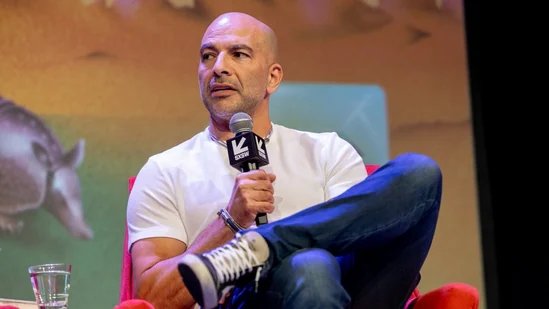
Peter Attia, a popular physician, bio-hacker and author of “Outlive: The Science and Art of Longevity,” made comments in 2021 about using nicotine gum to “sharpen his sword.” This past spring, he said he was “surprised” that many took his remarks as an endorsement of nicotine.
“Make no mistake about it, nicotine is highly addictive,” said Attia. He then cited small studies done on rodents that have shown nicotine can increase tumor growth and lower sperm count. The U.S. Food and Drug Administration has said that although it allowed pouches to be marketed in the U.S., that doesn’t mean they are safe.
Sesh, a nicotine company based in Austin, has attracted venture-capital funding from 8VC, a firm started by Palantir co-founder Joe Lonsdale. The venture firm normally doesn’t invest in consumer packaged goods, but Jake Medwell, a co-founder of the VC firm, said he became interested in the nicotine pouch category after seeing tobacco giant Philip Morris International buy Swedish Match AB, maker of Zyn, for $16 billion in 2023.
Medwell of 8VC said he was introduced to Sesh by a friend at the gym. After trying the product, he reached out to Sesh’s chief executive, Maxwell Cunningham. Shortly after, 8VC led the company’s $40 million financing round in September. Medwell, who has a nicotine-pouch fridge in his office, said he has had dozens of founders reach out to him inquiring about getting nicotine vending machines or products for their startups.
Lucy is another nicotine-pouch company that is also backed by VC investors, including Y Combinator and Greycroft. Lucy co-founder John Coogan gave a talk in 2022 at Heriticon, a conference hosted by Peter Thiel’s venture firm Founders Fund, about how nicotine is misunderstood. The event, advertised as “a conference for thoughtcrime,” had speakers discuss their most contrarian ideas, from time travel and aliens to immortality.
Before starting Lucy, Coogan co-founded Soylent, the liquid meal replacement of choice for techies a decade ago that was widely satirized in pop culture.
Unlike Soylent, whose customers largely came from tech, Lucy’s customer base is much more varied, said Coogan. People who work in finance, construction or real estate are still bigger consumers of nicotine than workers in tech, he said.
But drilling into the science behind nicotine is a conversation that feels exclusive to Silicon Valley, he said. “The discussion around nicotine in the tech industry is very different from what happens in a truck stop or on Wall Street,” said Coogan. “When I talk to a truck driver, they say this is great. They’re not talking about its half-life.”
Zack Ganieany, a tech founder who offers nicotine pouches in his startup’s office, cited caffeine’s “long half-life” as a reason for why he started using nicotine this year. “If you drink a cup of coffee in the afternoon, it could keep you up all night,” he said.
After Palantir posted a photo of its Lucy machine, dozens of founders in the tech community reached out inquiring about the machine, said Coogan, who is now also a co-host of TBPN, a popular daily tech show.
Cunningham of Sesh said he has been surprised with the types of customers his company has attracted. “When I first started the company, we had an entirely different consumer in mind,” he said.
That consumer looked more like Cunningham himself—a former chewing-tobacco user and e-cigarette smoker who found it very difficult to quit, even after he started experiencing chest pains.
“I want to be clear, we can’t make any productivity claims,” said Cunningham. “But I do think it’s really interesting to see the types of people and industries that are using our product.”
Write to Angel Au-Yeung at angel.au-yeung@wsj.com