
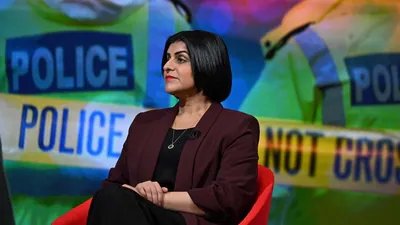
Shabana Mahmood has emerged as one of the top contenders for the post of Prime Minister in the UK after Labour leader Keir Starmer found himself in hot water due to the Epstein files. Mahmood, who is currently the home secretary, has backed hardline immigration reforms for the country.
Mahmood, who is the daughter of immigrants from Pakistan and has roots in Pakistan-occupied Kashmir, has stated that staying in the UK is a “privilege and not a right”, and hence the laws must also reflect a similar stance.
Also Read | UK may get first Muslim PM as Epstein files hit Starmer: Know Shabana Mahmood’s chances amid tough talk on immigration
Ministers have called to double the time it takes most migrant workers to qualify for permanent residence from five years to 10 years. While around 40 Labour MPs remain conflicted over the move, Mahmood has spoken out in support of the reform.
“I think at five years that’s actually quite a short period before people can be permanently settled in the country with all of the benefits that that brings,” Mahmood was quoted as saying by the BBC. “I think it’s right therefore that we extend it. And in the range of proposals that we’ve set out there are some things that could help you bring that qualifying period down,” she added.
Speaking to Sky News in a 2025 interview, Mahmood again defended her stance and stated that despite being a child of immigrants, she will work to fix the “broken system” and tackle illegal migration.
“I am the child of immigrants. Illegal migration is creating division across our country,” she said, adding, “It is a broken system and we have a genuine problem to fix. My job is to find a proper solution that can unite a divided country.”
Hypocritical stance on migration? She is not a first
Shabana Mahmood is not the first person of colour to head the home office and have a hard stance on immigration. Before her tenure, the office saw the likes of Priti Patel, Suella Braverman and James Cleverly under Conservative governments.
Under Patel, the plan to send asylum seekers to Rwanda was developed, so was a points based systems of immigrants.
Suella Braverman, who was an integral part of the Rishi Sunak cabinet, moved to crackdown on student and post graduate visas and grace periods to stay in the UK.
Cleverly continued this stance by increasing salary thresholds, announcing a five-point plan to cut migration and more restrictions n student, family visas and asylum requests.
Despite the change in government, Mahmood as home secretary echoes the sentiments and policies which reflect “firmness at the border.”