
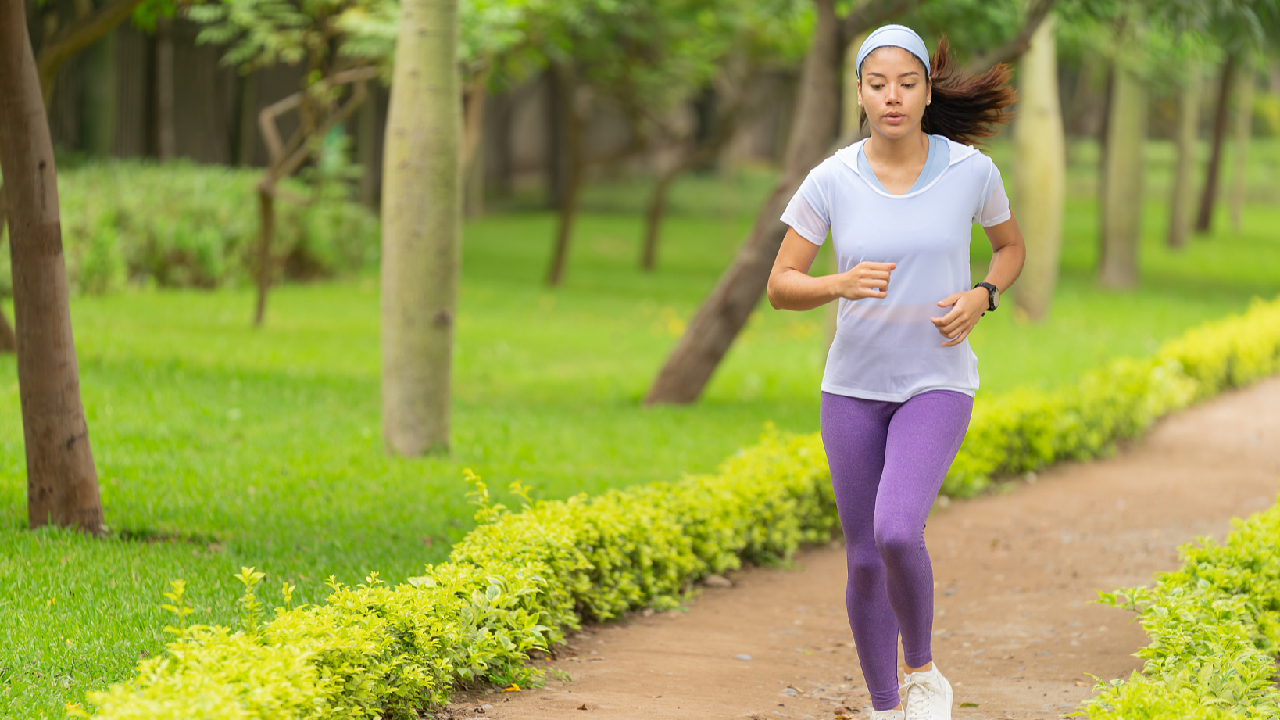
Running has always been a source of freedom for me – a way to clear my head, stay healthy and connect with the city around me. But as a woman, that freedom has never been unconditional. Every run involves a quiet calculation: where to go, what time of day feels safest, which routes to avoid. Over time, I have realized that these calculations change dramatically depending on the country and the city.
In Beijing, running feels fundamentally different from running in South Africa and the difference is safety.
In the early mornings in Beijing, the city is already in motion. Streets, parks and green corridors are alive with joggers, walkers, cyclists, elderly residents stretching together and commuters starting their day. Residents run alone, in pairs, or in loose informal groups, often sharing the same public space. This constant presence of people creates what urban planners call “eyes on the street” – a simple but powerful form of everyday surveillance. For women runners, this matters.
I can run alone in Beijing without constantly scanning my surroundings or adjusting my pace out of fear. I am aware of my environment, but not consumed by it. This sense of safety is not accidental. It is shaped by deliberate urban planning, social norms and the way public space is designed to be used.
<img src=' alt='A woman running alone along a park pathway. /VCG'
Designing safety into the city
Beijing’s approach to public safety and outdoor activity is multidimensional. Over the past decade, the city has invested heavily in green networks and public parks as part of broader urban development and public health goals. Hundreds of parks and green corridors have been built or upgraded, forming continuous networks designed specifically for recreation and exercise.
In newer urban districts alone, authorities have constructed more than 50 parks and over 375 kilometers of greenway routes. Across the city, the number of parks now runs into the thousands, with ongoing efforts to remove physical barriers and make spaces more open and accessible. These greenways separate runners and walkers from motorized traffic, reduce environmental risk and create wide, visible paths shared by pedestrians and cyclists.
Urban health research, including studies supported by the World Health Organization, shows that such environments reduce perceived vulnerability and encourage regular physical activity. Visibility, openness and shared use are key factors – particularly for women.
Another layer of reassurance comes from the visibility of security infrastructure. Cameras are common in parks, along greenways and at major intersections. While often unnoticed in daily life, their presence contributes to a sense that public spaces are monitored and maintained.
These spaces are not treated as decorative add-ons. They are integrated into Beijing’s broader urban planning strategy. The city’s Healthy Beijing Initiative and successive five-year plans emphasize people-centered design, aiming to ensure that green and recreational spaces are located within walking distance of residential communities. Parks and running routes are intended to be used throughout the day, not just at peak hours, reinforcing a steady rhythm of public presence.
This constant activity is crucial. Research in environmental health and urban design shows that active public spaces discourage misconduct and improve perceived safety far more effectively than isolated or poorly used areas. In practice, this means that when women run in Beijing, they are rarely alone – even when running solo.
<img src=' alt='Security cameras along a park path contribute to the sense of safety felt by many runners. /VCG'
Community, technology and collective presence
Safety is reinforced not only through infrastructure but also through social behavior. Beijing’s local authorities actively support community fitness initiatives, from district-level running events to family-friendly night runs. These activities normalize outdoor exercise at different times of day and encourage people of all ages to share public spaces.
Alongside formal events, informal running communities thrive. Many runners organize themselves through social platforms such as WeChat, sharing route information, arranging group runs and checking in on one another. These networks blend technology with community support, creating an added layer of reassurance, particularly for women who prefer not to run entirely alone.
Park management has also evolved. Authorities have introduced clearer signage, improved lighting in many areas, on-site staff presence and visitor education programs. While challenges remain — uneven lighting in some locations, for example — there is an ongoing push toward smarter infrastructure, including better way-finding and digital monitoring systems. The underlying principle is clear: well-maintained, well-used outdoor spaces are fundamental to public health and safety, not optional luxuries.
<img src=' alt='Streets in Beijing are well-lit for residents who choose to exercise after sunset, January 2026. / Denique Daniëls'
Health, green space and the ability to move freely
Feeling safe is not just about avoiding harm; it is a prerequisite for health. Research published in Environmental Health Perspectives and other public health journals shows that exercising in green environments is associated with lower stress levels, improved mood, reduced anxiety and depression and better cardiovascular outcomes. These benefits are strongest when people feel secure enough to use public spaces regularly.
In China’s major cities, parks and green corridors are embedded into daily life. They host exercise, socializing, family activities and quiet reflection throughout the day. This constant, ordinary use reduces isolation and contributes to a lower perception of risk – particularly for women.
On some evenings I run along Beijing’s river paths after sunset. The city is still alive: cyclists pass by, couples walk together and small groups finish late workouts. The paths remain well-lit and active. Even running alone, I rarely feel isolated. The movement of others creates a shared rhythm that makes the space feel collective rather than empty.
<img src=' alt='A woman runs along a well-lit pathway at night. /VCG'
The contrast with South Africa is stark.
In South Africa, safety concerns shape nearly every aspect of outdoor exercise. Surveys indicate that close to 80% of South African women feel unsafe running outdoors, citing fears ranging from harassment to violent crime. Many restrict their running to specific times, run only in groups, avoid entire neighborhoods, or stop running outside altogether. The mental burden of constantly assessing risk can be as limiting as the physical danger itself.
Globally, women runners share similar fears. An international Adidas survey found that more than 90% of women worry about their safety while running, regardless of location. But context matters. In cities where crime rates are high and public spaces are unevenly maintained or poorly monitored, fear becomes amplified and freedom of movement shrinks.
In Beijing, the opposite happens. Running alone as a woman is socially normalized. It does not attract attention. It does not feel transgressive. Cultural acceptance, dense urban life and visible public activity combine to create an environment where women – and men – can move through the city with greater confidence.
No city is without risk, and women everywhere take precautions. Beijing is no exception. But the difference lies in degree and in design. Safety here is supported by active public spaces, predictable patterns of movement and an understanding that women’s presence in the city is a normal part of public life.
Running should be simple. It should be about breath, movement and the quiet satisfaction of taking care of one’s body. In Beijing, I am reminded of what that freedom feels like. In South Africa, I am reminded of how easily it can be taken away.
The contrast is not just personal. It is structural. And it offers an important lesson: when cities are designed for people – and when women’s safety is treated as a shared public responsibility rather than a private burden – running becomes what it should be everywhere: an act of health, confidence and quiet independence.
Editor’s Note: Denique Daniëls is a multimedia editor for CGTN Digital. This article is part of China in Motion, a recurring column that explores contemporary Chinese life through movement – from running and walking to the design of public space, health culture and community. By observing cities at a human pace, the series captures how ordinary routines shape the experience of life in China.