
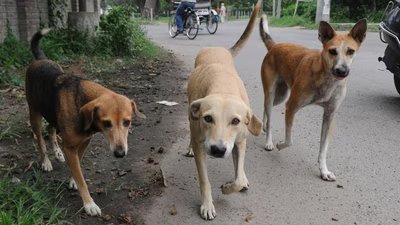
Morocco is facing mounting international scrutiny after animal welfare groups accused authorities of carrying out a large-scale cull of stray dogs as the country prepares to co-host the 2030 FIFA World Cup.
A joint investigation and advocacy campaign led by the International Animal Welfare and Protection Coalition (IAWPC) alleges that hundreds of thousands of dogs are being killed annually – and warns that as many as three million could ultimately be targeted in what campaigners have described as a “mass slaughter”.
The claims, strongly denied by Moroccan authorities, have drawn global attention, including from Oscar-nominated actor Mark Ruffalo, who called the alleged plan a “moral failure”.
‘Kill centres’ and eyewitness accounts
A recent investigation by The Athletic described a facility on the outskirts of Marrakech – reportedly an abattoir – where captured dogs are allegedly taken in vans and processed out of public view.
Witnesses cited in the report claimed that dogs are rounded up using nooses and metal clamps, loaded into vehicles and transported to holding sites.
Some alleged animals are shot, poisoned or left to starve. Others described scenes in which dogs were crammed into small pens without light or ventilation.
The IAWPC says it has compiled a 91-page dossier containing photographs, documents and testimony detailing methods such as shooting, strychnine poisoning and burning.
The group claims killings intensified after Morocco was confirmed in 2023 as a co-host of the 2030 tournament alongside Spain and Portugal.
In a separate report, campaigners alleged that around 300,000 animals had already been killed annually before the World Cup announcement, with numbers increasing since.
Government denial and proposed law
Morocco’s embassy in London has “categorically” denied claims of a World Cup-linked cull, insisting the country has a “demonstrated commitment to humane and sustainable animal management”.
In August, Morocco proposed legislation that would introduce prison sentences of two to six months and fines of up to $2,000 for anyone who “intentionally kills, tortures or injures” a stray animal. However, the draft bill also includes penalties for those found “sheltering, feeding or treating” stray animals – a provision critics argue criminalises compassion.
Animal welfare organisations maintain that while Morocco does face a genuine stray dog management issue – including rabies concerns highlighted by the World Health Organisation – mass culling is ineffective. They argue it creates a “vacuum effect”, where removed dogs are quickly replaced by unvaccinated animals, worsening long-term public health risks.
Morocco had previously endorsed TNVR (trap-neuter-vaccinate-return) programmes in 2019, but activists question their implementation.
FIFA under pressure
Football’s global governing body, FIFA, said Morocco’s World Cup bid included commitments to animal protection and that it is now following up to ensure those commitments are upheld.
In a statement cited by media outlets, FIFA said it had contacted the Moroccan Football Federation and was in dialogue with the IAWPC. An expert panel assembled by the coalition has submitted recommendations on draft regulations to Moroccan authorities.
Campaigners, however, argue that FIFA risks reputational damage if abuses are proven and not addressed. Some have suggested that failure to uphold animal welfare commitments could amount to a breach of hosting obligations.
Growing international concern
Images circulating online — shared by activists — purport to show dogs being shot or dumped in mass graves. While these images have not been independently verified in all cases, they have intensified global criticism.
Mark Ruffalo wrote on X: “Killing millions of dogs to prepare for a global sporting event is not progress, it’s a moral failure. Humane solutions exist, and choosing compassion over violence is a responsibility we all share.”
Within Morocco, some activists say speaking out carries risks. Individuals cited in investigations have requested anonymity, claiming intimidation and threats after attempting to intervene in dog round-ups.
Moroccan officials have dismissed some reports as “fake news” and described the controversy as a “conspiracy” involving manipulated images.
A World Cup shadowed by controversy
Morocco is set to co-host the 2030 World Cup with Spain and Portugal, marking the first time the tournament will span three continents, with a handful of opening matches also scheduled in South America.
The North African nation has invested heavily in infrastructure and tourism in recent years, positioning itself as a hub for major sporting events, including the 2025 Africa Cup of Nations.