
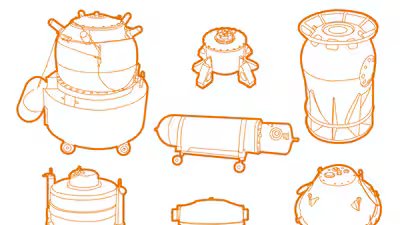
Sea mines are simple weapons that could give Iran outsize power to wreak havoc with the global economy.
U.S. officials said Wednesday that Iran had laid mines in the Strait of Hormuz, the narrow waterway that carries 20% of the world’s oil exports from the Persian Gulf to the rest of the globe. The U.S. Institute for the Study of War estimated that 10 mines had been laid, though President Trump cast doubt on such reports and encouraged shippers to traverse the strait.
“It’s a good tool of asymmetric warfare,” said Jahangir E. Arasli, a senior research fellow at Baku-based Institute for Development and Diplomacy who specializes in maritime threats. “The conventional capability is wiped out, but they have this asymmetrical capability,” he said, noting that he was speaking in his personal capacity.
Iran’s stockpile includes basic ordinance designed to drift or be anchored to the floor of the shallow Persian Gulf.
A U.S. military website describes one class of Iranian mine, the Maham 1, as a circular piece of 1980s-era equipment designed to float in water as shallow as a meter that is equipped with five horns that when struck can detonate up to 120 kilograms of explosives. The mines are moored on a chain or anchored to the seabed.
Mines have been among the most destructive weapons that the U.S. Navy has faced, maiming more ships than any other means of attack since World War II, according to a U.S. Naval Institute report produced several years ago.
The U.S. military said it has destroyed Iranian naval vessels designed for setting mines. The military earlier said it eliminated an Iranian Kilo-class submarine, which was also thought to have the capability to launch mines.
Yet Iran primarily sets mines using frogmen on small boats that resemble ordinary fishing vessels, an informal maritime militia of dinghies that is virtually impossible to identify and eliminate.
Iran also has an arsenal of limpet mines that divers can attach to the hulls of a ship.
For Iran, mines aren’t important for the particular damage they can do to passing ships because “their primary objective is disruption” to shipping and the global economy, said Arasli.
They also could be laid to deter the U.S. from a ground invasion, said Anas Alhajji, managing partner at Energy Outlook Advisors.
As thousands of ships sit on anchor awaiting safe passage through the strait, pressure is building on the U.S. to organize escorts by navy ships. Trump has said it is being considered, though the Pentagon hasn’t signaled that it has the go-ahead.
Detecting mines will be part of any escort mission. Navy ships will be led by vessels equipped to detect and dodge or eliminate mines one at a time. Such equipment is designed to use sonar to locate the devices.
Last year, the Navy cited a “changing world” in announcing a set of contracts for mine-countermeasure equipment that would include robot minehunting capabilities.
The Mine Countermeasures Unmanned Surface Vehicle was described as “an unmanned, diesel-powered surface craft” designed to be launched from a littoral combat ship.
Even the threat of mines has kept ships out of the strait. Of more immediate concern are drone and missile attacks. The U.K. Navy’s Maritime Trade Operations Centre says five commercial ships in two days near the strait have been hit or faced near misses with projectiles or drones. The monitoring service hasn’t reported any incidents involving mines.
The risk of mines in the Persian Gulf emerged in the 1980s as a risk to global shipping during the decadelong Iran-Iraq war in an episode now known as Tanker Wars, when the U.S. Navy began escorting ships to protect them as both belligerents attacked oil industry assets.
A mine designed to be moored in place called the SADAF-02 in April 1988 sparked one of the U.S. Navy’s most serious sea battles since World War II.
The frigate USS Samuel B. Roberts was on a routine convoy escort mission in the Persian Gulf when it struck the mine. Then-President Ronald Reagan ordered a powerful response, and U.S. forces launched an operation called Praying Mantis that targeted several Iranian assets.
Write to James T. Areddy at James.Areddy@wsj.com, Roque Ruiz at roque.ruizgonzalez@wsj.com and Carl Churchill at carl.churchill@wsj.com