
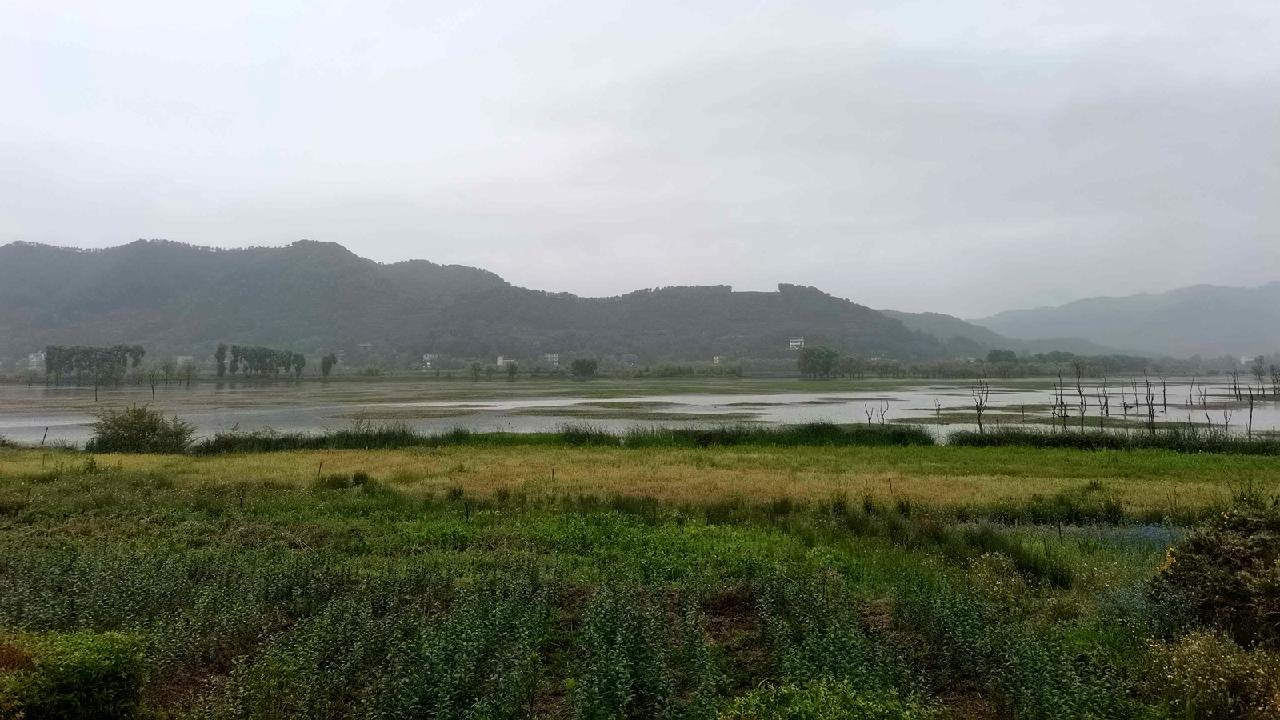
Editor’s note: The revised Nature Reserve Regulations takes effect on March 15, following the historic adoption of China’s first comprehensive Ecological and Environmental Code by the 14th National People’s Congress. CGTN invited Xu Jiliang, dean and professor at the School of Ecology and Nature Conservation, Beijing Forestry University, to explain how the new two-zone system, along with differentiated and seasonal management measures, reflects a shift from rigid “one-size-fits-all” governance to a more scientific and people-oriented approach, balancing strict ecological protection with residents’ livelihoods and sustainable development.
<img src=' alt='Huize Black-necked Crane National Nature Reserve, Qujing City, Yunnan Province, southwest China. /Xu Jiliang'
Optimizing and improving the zoning control measures for nature reserves is a key focus of this revision to the Regulations.
Some of the zoning control measures for nature reserves stipulated in the original Nature Reserve Regulations do not fully align with practical needs, leading to conflicts and issues during implementation.
For example, nature reserves contain extensive human activities, including towns, villages, residents, mining rights and collective forests.
Preliminary statistics indicate that national nature reserves encompass approximately 4 million residents (with about 400,000 in core zones), along with around 800,000 hectares of permanent basic farmland and roughly 210,000 hectares of commercial plantations.
The original Nature Reserve Regulations did not clearly specify how to properly balance conservation with economic development or residents’ livelihoods, nor did they account for regional differences, resulting in a rigid “one-size-fits-all” management approach.
This has led to a situation where the rules are neither strictly enforced nor flexibly implemented.
<img src=' alt='A crested ibis is seen at Hanzhong Crested Ibis National Nature Reserve, Shaanxi Province, northwest China, March, 20, 2025. /VCG'
In order to balance high-quality development with high-level conservation, and to align with the zoning control measures for national parks, the revised Nature Reserve Regulations have adopted an approach consistent with the National Park Law regarding zoning control measures.
Specifically, the previous three-zone system of core zones, buffer zones and experimental zones in nature reserves has been restructured into a two-zone system comprising core conservation areas and general control zones.
This adjustment not only enhances standardized management of nature reserves but also simplifies the zoning framework to improve public understanding of conservation regulations.
As a general rule, the former core zones and buffer zones are reclassified as core conservation areas, while experimental zones are re-designated as general control zones.
The revised Nature Reserve Regulations stipulate that human activities are prohibited in principle in core conservation areas and strictly restricted in general control zones.
At the same time, the revised version clearly specify necessary activities that are permitted, including activities essential for the conservation of the nature reserve, necessary production and subsistence activities of existing residents, activities required for national security or the implementation of major national strategies, construction of major national projects that cannot be avoided, and related public services.
These revisions represent a significant optimization and refinement of the zoning control measures for nature reserves.
<img src=' alt='A view of Chongzuo White-Headed Langur National Nature Reserve, the Guangxi Zhuang Autonomous Region, south China, May 26, 2026. /VCG'
Compared with the original Nature Reserve Regulations, the newly revised version innovatively introduces differentiated control measures, marking a shift in China’s nature reserves management from a rigid, “fence-in” approach to a more scientific and refined governance model.
In particular, Article 28 of the revised version explicitly stipulates that, under the premise of ensuring the safety of key conservation targets and without impairing ecological functions, differentiated regulation may be implemented based on scientific justification.
It also specifies three scenarios where differentiated regulation may be applied. This represents a core measure to achieve a balance between strict conservation and rational utilization.
<img src=' alt='A drone picture shows red deer roaming farmland in Xilinhot, the Inner Mongolia Autonomous Region, north China, February 5, 2026. /VCG'
For nature reserves where the main conservation targets are natural heritage sites, necessary protective, exhibition and display facilities may be constructed within core conservation areas.
Activities such as paleontological fossil surveys and excavations, as well as appropriate public services including science popularization, ecotourism and educational, cultural and sports activities, may also be carried out.
Moreover, for nature reserves where the main conservation targets are located underground, the surface areas of their core conservation zones may be managed and protected in accordance with the revised version for general control zones.
Under the original Regulations, uniform regulation requirements were applied to both surface and underground areas of nature reserves, which lacked scientific precision in management.
<img src=' alt='Danxia landform in Zhangye, Gansu Province, northwest China, September 26, 2025. /VCG'
In particular, for nature reserves where natural ecological processes or the habitation and reproduction of key conservation targets follow distinct seasonal patterns, seasonal differentiated regulation measures may be implemented.
For example, the Yunnan Huize Black-necked Crane National Nature Reserve, with a total area of 129 square kilometers, primarily protects the black-necked crane and the wetland ecosystem where it overwinters.
Birds such as the black-necked crane have long relied on the farming activities of local residents for food sources, forming a stable symbiotic relationship between humans and birds.
The original Regulations, which prohibited anyone from entering the core zones of nature reserves, not only severely restricted the production and livelihoods of local residents but also affected the foraging of birds.
The revised version stipulates that seasonally differentiated regulatory measures are permitted in such reserves. Specifically, during the birds’ overwintering period, strict protection is enforced in the core conservation areas, where human activities are, in principle, prohibited.
During the seasons when the birds have migrated away, the core conservation areas may be managed as general control zones, allowing local residents to carry out normal production activities.
<img src=' alt='Black-necked cranes in Zhaotong, Yunnan Province, southwest China, January 5, 2026. /VCG'
These provisions align with the spirit of the National Parks Law regarding seasonal regulation and other related aspects, collectively forming the institutional foundation for tailored measures and targeted management of China’s protected natural areas.
In addition, it is important to emphasize that the formulation and implementation of any differentiated regulation measures must be based on scientific justification and carried out under the premise of ensuring the safety of key conservation targets and without impairing ecological functions.
The ultimate goal is to achieve a unified balance between ecological conservation, livelihood improvement and green development.
For more: Grassland protection and restoration in the 15th Five-Year Plan