

Listen to this article
Estimated 3 minutes
The audio version of this article is generated by AI-based technology. Mispronunciations can occur. We are working with our partners to continually review and improve the results.
A small group of Haitian Canadians celebrated the island nation’s Independence Day at a B.C. church on Thursday by serving soup that symbolizes freedom.
It has been 222 years since Haiti celebrated its victory over French colonizers, with the nation’s independence day marked by Haitians and the diaspora worldwide on Jan. 1.
Traditionally, the day is marked by serving soup joumou — a dish based on kabocha squash, which Haitian slaves were forbidden from eating, but which the community has now reclaimed as a symbol of unity.
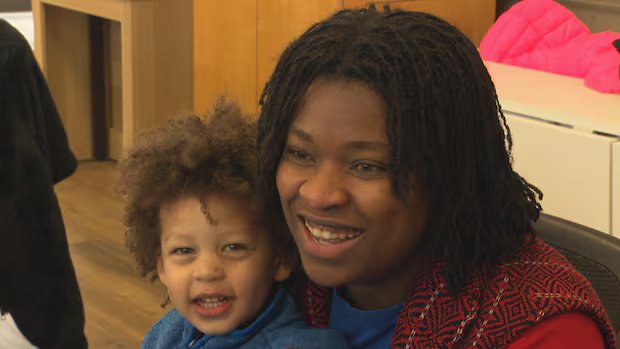
Around 50 Haitian Canadians gathered at the New Westminster Christian Reformed Church on Thursday to celebrate an occasion that they say remains meaningful for Black people everywhere.

Debbie MacNab of Abbotsford, B.C., said Thursday’s event was the first large Haitian Independence Day celebration she had attended in 15 years.
“It’s nice to see a lot of Haitian people, especially on New Year’s. So this is like back home,” she said.
Around 1,200 people in B.C. claimed Haitian ethnic or cultural origin in the 2021 census.

Chef Elie Chery said he was proud to prepare the soup for the event organized by the Canadian Haitian Cultural Association of B.C. (CHCA-BC).
“It’s a way to unite, to see each other, to reconnect with our community,” he said.
Chery said the soup doesn’t have a traditional recipe, but he added carrots, cabbage, beef and goat meat — and the all-important squash and spices.

For the chef, independence day carried extra meaning for the Haitian community around the world this year, given the small country qualified for the FIFA World Cup for the first time in over 50 years.
“That’s this year. That soup, it’s like [bringing] us more joy,” he said.

Saul Ferolus, the president of CHCA-BC, said that Haitian Independence Day symbolizes freedom for all Black people around the world.
Haiti has been recognized as the world’s first Black republic, freeing itself after decades of rebellion by enslaved people.
Ferolus said that when Haiti became independent on Jan. 1, 1804, it symbolized that there was a way to free oneself from any system that was oppressive, as long as people were united.
“No matter your colour, no matter your language, no matter your background, no matter the culture you grew up [in] — we can still come together to resolve a problem that is destroying the world or the society,” he said.