
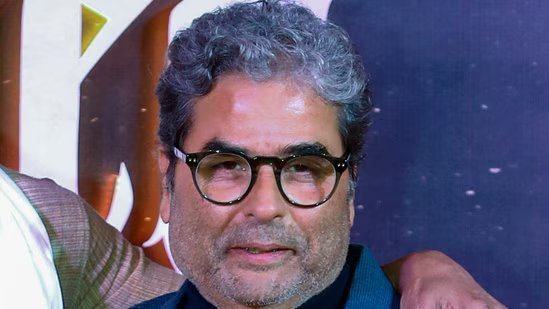
Good cinema is going through a deep struggle, said Vishal Bhardwaj. This was the case in the pre-OTT era and even now, with filmmakers taking their projects to streaming platforms and being told the film should be released in theatres first.

The casualty of this is “cinema of the heart and sensibility”, added the director. Twenty years ago, it would have been easy to raise money for films such as his own Haider, Vikramaditya Motwane’s Udaan and Anurag Kashyap’s Gangs of Wasseypur that were released in theatres and celebrated by discerning audiences.
Not any more.
“Now you won’t be able to raise money for them. Now there is a straight demarcation, ‘This is the subject, take it to OTT’ and OTT people say, ‘No, we don’t want it, release it in theatres first, then we will take it here’. Good films are getting beaten in the process,” Vishal told PTI.
What is needed is a “revolutionary step”, and we don’t know when that will happen and whether it will be through a film or a new medium, he said.
The current theatrical landscape, Vishal went on to explain, is difficult for filmmakers, with his contemporaries and directors he admires now telling their stories on streaming platforms.
“We are in a very strange and difficult phase of filmmaking. I think it’s global… The films to be made for theatres have taken a totally new turn,” Vishal said.
Referring to his contemporaries — Anurag, Dibakar (Banerjee), Shriram (Raghavan), Vikramaditya and Imtiaz (Ali) –he said most are working for OTT. And even if they do make films for theatres, it doesn’t always work.
“… It’s so sad. I don’t remember Vikram’s last film in theatres. I am Vikram’s fan. I am Dibakar’s great fan, they make great cinema,” Vishal added.
According to the director, theatrical movies faced a challenge in the past with the advent of satellite television. Then, the gap between a film’s release in theatres and its arrival on TV would be five to six months. Today, a film is released in theatres and is on some OTT platforms eight weeks later.
“If you want to make films for theatres, you have to look at yourself from a new perspective. By doing all that, how do you still keep yourself alive in that film is a challenge. In between, OTT platforms were making originals, but that’s also now less… Good cinema is going through a deep struggle, which is always the case anyway,” the filmmaker said.
“To make people go, ‘I want to see it now, I don’t want to wait for eight weeks’, to create that lure, you have to do all kinds of things. What is happening is, the ones who are getting defeated are the cinema of the heart, cinema of the sensibilities,” he said.
The days following the release of his 2003 film Maqbool, starring Irrfan Khan, Pankaj Kapur, Tabu and Piyush Mishra, were great for directors, Vishal said.
“Around 2004-2005, and before the pandemic, it was the golden period. You could make anything, you could release anything, people used to come to theatres for films like Haider. Gangs of Wasseypur becomes a cult… Khosla Ka Ghosla, Oye Lucky Lucky Oye, Udaan…”
The filmmaker, who most recently released Shahid Kapoor and Triptii Dimri-starrer O Romeo, said the advent of OTT, rising ticket prices and the shortening gap between the theatrical window and the films’ arrival and other such factors have led to the dip in theatrical business.
“I was in Delhi, and a few of my friends were going to watch my film. So they said, ‘Give us ₹6,000, we are going to watch your film’. They were three. I said, ‘Why 6,000? They said, ‘You don’t know, the ticket price is ₹1,900 rupees per seat in that (hall)’. Everyone must be having their reasons, the theatres, and the infrastructure of the theatres, the taxes, or whatever.”
“People say they will watch it on OTT. But there is so much content available on OTT, not just Indian, but globally, there is so much available. We need a revolutionary step, and we don’t know when that will happen and whether it will be through a film or a new medium?”