
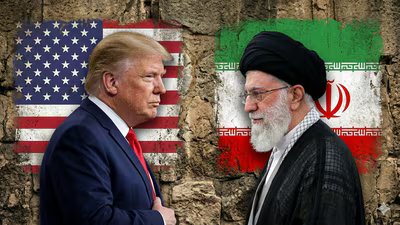
Iran’s Supreme Leader Ali Khamenei had long spoken about martyrdom and the possibility of assassination. When the Israel-US airstrikes came on Saturday morning, killing the 86-year-old cleric at his compound near Pasteur Street in Tehran, Khamenei had chosen to stay overground.
According to a detailed report by the Financial Times, the operation that led to Khamenei’s death was the culmination of a years-long Israeli and US intelligence campaign that mapped Tehran with extraordinary precision – down to traffic camera angles, mobile phone signals and the daily routines of his security detail.
A leader who did not live in hiding
Unlike his ally Hassan Nasrallah – who spent years moving between underground bunkers before being killed in Beirut in 2024 – Khamenei did not typically live in hiding.
Publicly, he had mused about the possibility of being assassinated, describing his life as inconsequential to the survival of the Islamic republic. Some Iran analysts told the FT he expected to be martyred.
Even so, he had taken precautions during wartime. One person interviewed by the FT said it was unusual for him not to be inside one of his two bunkers. “If he had been, Israel wouldn’t have been able to reach him with the bombs that they have,” the person said.
But on Saturday morning, intelligence indicated he would be attending a meeting with senior officials at his office compound – and that opportunity proved decisive.
Operation Epic Fury: Years of surveillance
Nearly all traffic cameras in Tehran had reportedly been hacked for years as part of a broader intelligence effort. One particular camera angle gave Israeli analysts insight into where trusted bodyguards parked their vehicles and helped build what intelligence professionals call a “pattern of life”.
The report said this stream of real-time surveillance was just one of hundreds of intelligence inputs used to determine exactly when Khamenei would be present and who would be with him.
Israel’s signals intelligence unit, Unit 8200, played a central role, alongside human assets recruited by Mossad. Military intelligence reportedly digested vast volumes of data into daily briefs, while algorithms using social network analysis sifted billions of data points to identify decision-making centres and fresh targets.
“We knew Tehran like we know Jerusalem,” a current Israeli intelligence official told the FT. “And when you know a place as well as you know the street you grew up on, you notice a single thing that’s out of place.”
Israel also reportedly disrupted components of around a dozen mobile phone towers near Pasteur Street, making calls appear busy and preventing Khamenei’s protection detail from receiving potential warnings.
Double verification and a human source
To get a target of Khamenei’s stature, failure was not an option. Israeli doctrine requires two separate senior officers, working independently, to verify with high certainty that a target is present at the location and to confirm who is accompanying him.
According to people familiar with the matter cited by the FT, Israeli intelligence relied on hacked traffic cameras and deeply penetrated mobile networks that showed the meeting was proceeding as scheduled.
The Americans reportedly had what was described as an even more concrete source: a human asset.
Once US and Israeli intelligence determined that Khamenei and senior officials would be gathered together, officials assessed that striking before full-scale war unfolded would be easier than hunting them after they dispersed into hardened bunkers.
Operation Epic Fury
At 3:38 pm Eastern time on Friday, while aboard Air Force One en route to Texas, US President Donald Trump authorised Operation Epic Fury – the US-led strikes on Iran conducted alongside Israel.
According to General Dan Caine, chair of the US Joint Chiefs of Staff, the US military launched cyber attacks to clear the path for Israeli jets by “disrupting, degrading and blinding Iran’s ability to see, communicate and respond”.
Also read: The inside story of Trump’s decision to strike Iran, assassinate Khamenei
Israeli aircraft, which had flown for hours to synchronise their arrival, released as many as 30 precision-guided munitions on Khamenei’s complex. Trump later told Fox News that the Iranian leadership had been meeting for breakfast when they were killed.
The Israeli military said striking in daylight provided tactical surprise despite heavy Iranian preparedness.
A political decision
More than half a dozen current and former Israeli intelligence officials told the FT that killing Khamenei was ultimately a political decision, not merely a technological achievement.
Even during the intense 12-day war in June 2025, Israel made no known attempt to bomb him, instead targeting the leadership of the Islamic Revolutionary Guard Corps, missile systems and nuclear facilities.
Diplomatic talks between Washington and Tehran had been expected to continue this week, with Oman describing recent negotiations as fruitful.
Publicly, Trump had complained that talks were moving too slowly; privately, according to a person familiar with the matter, he was dissatisfied with Iranian responses.
The attack had been planned for months but was moved forward once intelligence confirmed the Saturday morning meeting.
Khamenei, only the second supreme leader of the Islamic republic after Ruhollah Khomeini, had survived decades of regional conflict and assassination attempts against allies.
In the end, he was not hiding – and he knew the risks. But as one former Mossad official told the FT, Israel’s recent intelligence successes created their own momentum.
“In Hebrew, we say, ‘With the food comes the appetite,’” she said.