SYDNEY—Australians are again bracing for rate pain, as an overheating economy forces the central bank to tighten the policy screws.
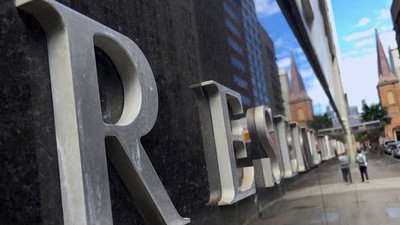
The Reserve Bank of Australia raised rates at its first meeting of 2026.
A yearslong drought of meaningful economic reform under successive governments has condemned Australia’s households to rapid-fire interest-rate increases whenever the economy even looks like it is gathering a bit of steam.
This week, the Reserve Bank of Australia raised rates at its first meeting of 2026, taking back a cut delivered months earlier while admitting that it got inflation forecasts badly wrong, and that price pressures have again become a significant problem.
RBA Gov. Michele Bullock avoided giving forward guidance to markets, but made it abundantly clear that she is serious about slaying the inflation dragon.
Her comments to the media were replete with warnings about the dangers of surging core inflation, and the RBA said the price growth could top its 2% to 3% target band long-term.
It is almost certain that the RBA will raise rates again in May, with a third hike highly probable in the second half of the year.
The central bank’s own forecasts suggest it will miss its mandated inflation target for at least another year, and probably for another two, said George Tharenou, chief economist at UBS, Australia.
That grim outlook comes despite the RBA’s assumption that the official cash rate could rise to around 4.3% from 3.85%, and that the Australian dollar will stay strong, he added.
As interest rates climb, unemployment is expected to grind higher as inflation gradually grinds lower, while the recent current pickup in economic growth is set to peter out fast, according to the RBA.
Bullock is painfully aware that, after a decade of flagging productivity growth and scant reforms to address the issue, the economy can no longer grow at the pace that it did a generation ago.
Even with gross domestic product growth running at just a little over 2% a year, Australia’s economy is badly constrained.
“Productivity—the engine of our economy—is so weak that our nation can’t grow at anything like the rates of the past without setting off a burst of inflation and a matching response of higher interest rates,” said Chris Richardson, economist at Rich Insight.
But if Bullock presses the accelerator a touch too hard, steam will pour from the economy’s hood.
Treasurer Jim Chalmers is also feeling the heat, coming under mounting pressure to dramatically cut government spending when he announces the federal budget in May.
State and federal governments have gone on a spending binge in recent years targeting things like social programs and new infrastructure.
The added public demand gave the economy critical support in the years after the pandemic, but that has now combined with stronger private demand to overheat the economy.
The government needs to tread carefully to avoid ramping up spending in the economy, said Richardson.
Against that backdrop, “the long and winding road to recovering [Australia’s] lost living standards is looking both longer and windier,” he said.