
There is nothing like a great double feature. Originally a marketing gimmick where movie theaters sold two tickets for the price of one, the pairing of a double feature has now become an art form in itself. A good double feature is like a good playlist or a good wine pairing. You can mix genres or films that complement one another, where the similarities blend perfectly. Or, you can find contrasting picks that bring out the best in each other.
While one can go as wild as they want, a double feature of the 2023 movie Past Lives and Transformers: Rise of the Beasts might be a stretch (but it could be worth it). These 10 double features make for a great pairing for a night in. Connected by directors, themes, and even titles, these unique pairings make for a compelling and well-balanced cinematic experience.
‘Goodfellas’ (1990) / ‘Casino’ (1995)
A double dose of Martin Scorsese with two of his most acclaimed films that defined the director’s 1990s slate: Goodfellas and Casino. Both films are grand criminal epics featuring Robert De Niro and Joe Pesci as mobsters, exploring the complex world of organized crime. While Goodfellas is a classic New York-set film, Casino takes the action to the West Coast in Las Vegas, Nevada. Both movies feature Scorsese’s trademarks, from narration and fast-paced edits to rock and roll soundtracks that both just happen to use The Rolling Stones’ “Gimmie Shelter.”
Over the years, many have unfavorably compared Casino to Goodfellas, with the words “bloated” or “knock-off” often used to describe it. However, the nearly three-hour runtime for Casino helps distinguish it. While Goodfellas focuses primarily on the mob through the rise and fall of a small-time crook, Casino examines the mafia as an institution in an epic story about how the organization lost its grip in Las Vegas. Since Casino feels like a spiritual sequel, this is a great pairing.
‘The Apartment’ (1960) / ‘When Harry Met Sally’ (1989)
This double feature combines two of the greatest romances in cinema history. Billy Wilder’s The Apartment and Rob Reiner’s When Harry Met Sally make for the ultimate New Year’s Eve and New York City pairing. The Apartment and When Harry Met Sally are both films about two individuals in New York who, after a series of complications and their own personal baggage keeping them apart, finally confess their feelings for one another on New Year’s Eve. Each movie has a cynic and a romantic, although the genders are reversed in each film. Jack Lemmon in The Apartment and Meg Ryan in When Harry Met Sally are romantics, and Shirley MacLaine and Billy Crystal, respectively, represent the cynics.
The Apartment was a controversial film at the time of its release, thanks to the central idea of a man leasing out his apartment to his married coworkers to have affairs. Since the main romantic interest was a woman with whom the man was having an affair, that didn’t go over very well. In many ways, the black-and-white film stock makes The Apartment a darker film, while also ironically featuring characters whose morals are not that black-and-white. Meanwhile, When Harry Met Sally is a warm and comforting film that feels like a hug. The love story it depicts feels even more eternal now that director Rob Reiner and writer Nora Ephron have since passed away.
‘Ed Wood’ (1994) / ‘The Disaster Artist’ (2017)
Ed Wood and The Disaster Artist are films about the art of making movies. However, there’s an added twist: people view the central subjects, Ed Wood and Tommy Wiseau, as directors who have made some of the worst movies ever made. Tim Burton’s Ed Wood is a much kinder-hearted look at Ed Wood, showcasing the passion and drive it took to make even terrible films like Plan 9 from Outer Space, while keeping the focus on Wood and the unique found family of outcasts that his movies created.
The Disaster Artist is a slightly darker take. The movie is focused on the production of The Room and keeping Tommy Wiseau (played by James Franco, who also directed the film) as an enigma to everyone around him, even to someone who is supposed to be his friend. Paired together, Ed Wood and The Disaster Artist are films about how nobody sets out to make a bad movie, and how even when the finished film is a disaster, it can still find an audience.
‘War of the Worlds’ (2005) / ‘The Shape of Water’ (2017)
Think of the War of the Worlds and The Shape of Water double feature as two auteur filmmakers (Steven Spielberg/Guillermo del Toro) making big-budget “remakes” of classic 1950s B sci-fi horror films (War of the Worlds/Creature from the Black Lagoon) through a modern lens informed by their own artistic sensibilities. While the 1953 War of the Worlds used H.G. Wells’s story as commentary for the Cold War era, Spielberg reimagines the classic tale as a modern allegory for the post 9/11 United States. It matches the director’s bleak, cynical output of the 2000s, including movies like A.I. Artificial Intelligence, Minority Report, and Munich.
Guillermo del Toro’s The Shape of Water takes the Creature from the Black Lagoon archetype but recontextualizes it for an audience who no longer fears the creature but instead empathizes with it. The movie is set in the 1950s during the Cold War as a commentary on the era’s emphasis on “conformity.” The Creature is the ultimate outsider in an era still hostile to non-white heterosexual men. Since del Toro cast the Creature as the romantic leading man, audiences feel more empathy towards the Universal Monsters than when they were created. Together, War of the World and The Shape of Water give the drive-in double feature a prestigious makeover.
‘Drive’ (2011) / ‘Baby Driver’ (2017)
Yes, both Drive and Baby Driver have the word “drive” in them and focus on the perspective of a talented getaway driver who is forced to protect their loved ones once their violent criminal lifestyle overlaps with their quiet normalcy. These movies also feature getaway drivers wearing distinct jackets and driving gloves. Both films are also known for their unique soundtracks, with “Nightcall” by Kavinsky serving as the main theme for Drive, while Baby Driver is named after a Simon and Garfunkel song.
Drive and Baby Driver nicely complement one another. Nicholas Winding Refn’s Drive is a meditative, atmospheric film, with a neon-coded world and electro-synth pop that gives it a 1980s flavor. Baby Driver is fast-paced and kinetic. It’s propulsive and always moving forward, like a car chase itself. It’s some of Edgar Wright’s finest action filmmaking. Drive can either be the slow meditative build-up into Baby Driver, or the slower but equally intense relief after the excitement of Edgar Wright’s biggest box office hit.
‘Speed Racer’ (2008) / ‘Ford v. Ferrari’ (2019)
Speed Racer and Ford v Ferrari might appear to both be racing films with drastically different aesthetics, but under the hood, they have a lot in common. And they’re each about more than racing cars. Each film uses racing as a metaphor for the act of filmmaking. The Wachowskis and James Mangold explore the push and pull between the individual’s free artistic expression and the business side of the medium. Is it even possible to maintain artistic integrity in a corporate culture?
Both films’ worldviews are also tied to their director’s unique perspectives. Speed Racer, like the Wachowskis’ other most famous work, The Matrix, is about a group of outsiders breaking free from the restraints of “the machine,” where one bold act of artistic expression can change everything. Ford v Ferrari is more pragmatic. It explores the compromise of making art in a capitalist system that needs to appease shareholders while also making good products, be it cars or movies. James Mangold did the same thing in biopics like Walk the Line, remakes like 3:10 to Yuma, and superhero fare like Logan.
‘The Hurt Locker’ (2009) / ‘Avatar’ (2009)
The 82nd Academy Awards were truly a battle between The Hurt Locker and Avatar. That makes sense considering that the films were directed by Kathryn Bigelow and James Cameron, who were previously married. So, it’s no wonder that the Best Picture race was framed as a battle of the exes (despite Bigelow and Cameron being good friends). However, the movies also feel like total opposites. Avatar became the most successful film of all time and was one of the most expensive films ever made. The Hurt Locker was a $15 million production and, at the time, the lowest-grossing Best Picture winner in history.
The Hurt Locker and Avatar make for a fascinating double feature. Despite Avatar being set in the future and The Hurt Locker being set in the second year of the Iraq War, both films are about advanced military units becoming occupying forces in a region in conflict with the land’s native population. The Hurt Locker maintains the perspective of the military unit, while Avatar focuses on the indigenous population and frames humanity’s armed forces as the villains. The Hurt Locker and Avatar‘s narratives are centered on men with military backgrounds whose unique methods make them both an asset and a liability. Viewed together, The Hurt Locker and Avatar represent the wide spectrum of what film has to offer.
‘Lost in Translation’ (2003) / ‘Her’ (2013)
Since Sofia Coppola and Spike Jonze were previously married, their films Lost in Translation and Her feel like they’re in conversation with one another. The movies seem to offer insight and comment on their divorce. Despite being produced a decade apart, the ex-husband-and-wife duo both cast Scarlett Johansson as the centerpiece of their films about finding unlikely companions in emotional states of severe isolation. Johansson’s Charlotte in Lost in Translation seemingly acts as Coppola’s avatar. Jonze cast Johansson as the voice of Samantha, the artificial intelligence operating system at the heart of Her.
Giovanni Ribisi’s Lost in Translation character John also seems like a stand-in for Jonze, and Rooney Mara’s Her character Catherine, the ex-wife of Joaquin Phoenix’s Theodore, is supposedly inspired by Coppola. Lost in Translation and Her are movies about isolation, with Coppola using the streets of 2000s Tokyo, while Jones imagines a not-too-distant future where warm, round architecture highlights the characters’ loneliness, just as the bright streets of Tokyo do. When watched back-to-back, these movies feel like two sides of the same story.
‘Batman Begins’ (2005) / ‘Superman Returns’ (2006)
There are plenty of pairings of Batman and Superman movies, yet the pairing of Batman Begins and Superman Returns offers a unique snapshot of both DC Comics and the superhero movie genre in the mid-2000s. Batman Begins is a grounded exploration into Batman’s origin that reboots the franchise and disregards all the continuity that came before. Superman Returns is a long-awaited sequel to 1978’s Superman: The Movie and 1981’s Superman II (ignoring Superman III and IV). Despite having drastically different aesthetics and tones, Batman Begins and Superman Returns share a similar visual language, which subconsciously makes them feel like these two characters could exist within the same DC Universe.
Part of this shared DNA stems from Batman Begins and Superman Returns being heavily influenced by Richard Donner’s Superman: The Movie, with both films aiming to create a grand, operatic spectacle that befits the status of their iconic heroes. This is partially accomplished by Batman Begins being shot on 35mm film stock. In contrast, Superman Returns used a lens to replicate the look of a 35mm print, helping both films feel more like the blockbusters of the 1970s than the superhero films of the 2000s. The ends of Batman Begins and Superman Returns are less about sequel teasing and more about putting each hero in positions that fit popular culture’s collective image of them, soaring over the heavens to protect and save.
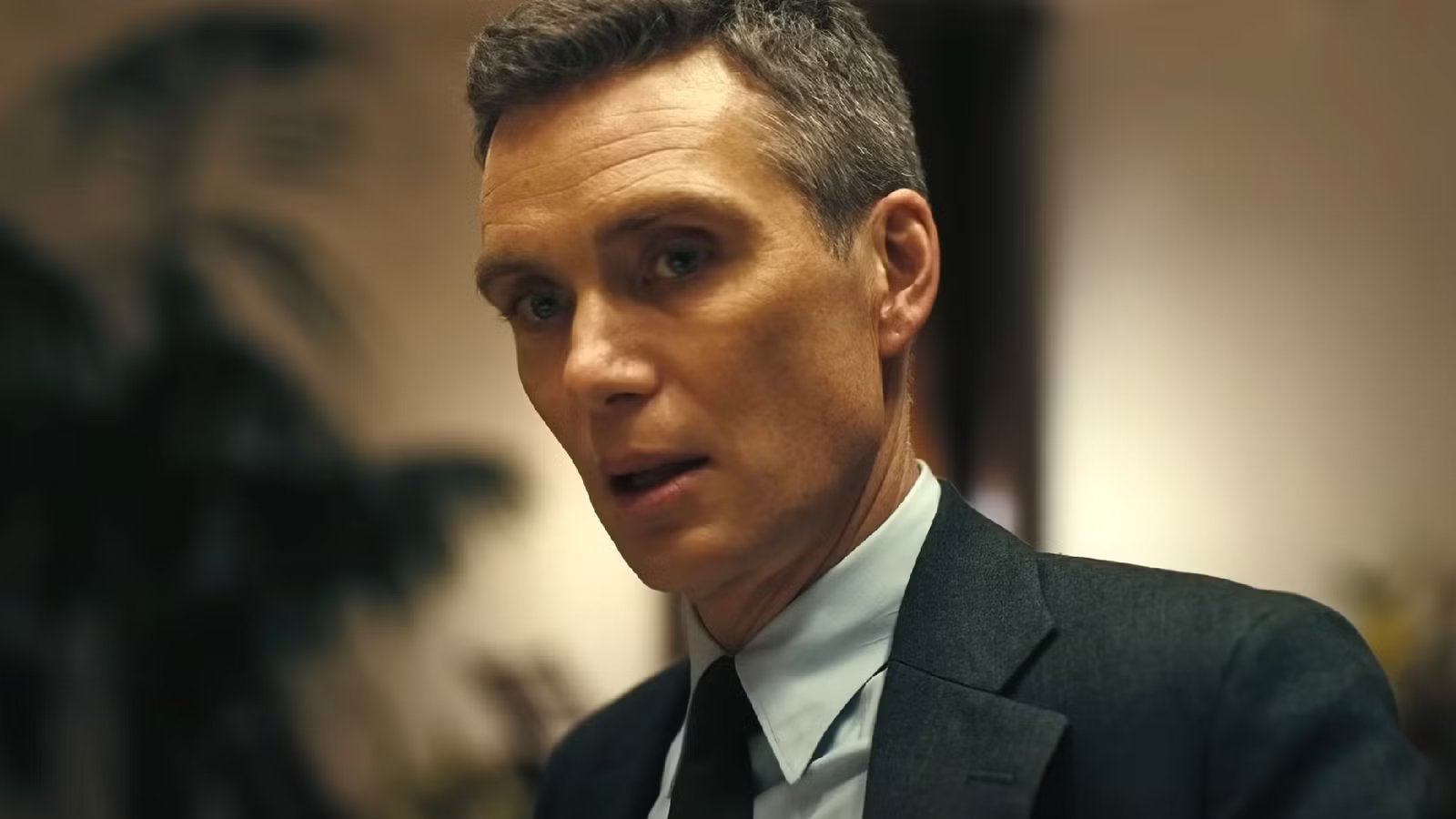
‘Oppenheimer’ (2023) / ‘Godzilla: Minus One’ (2023)
When it comes to double features, Oppenheimer will always be linked to Barbie and the cultural phenomenon of Barbenheimer. But, in 2023, another film came along that made for a great pairing with Oppenheimer: none other than Godzilla Minus One. Godzilla’s origin, both within the film canon and behind-the-scenes movie history, is linked to the atomic bombs that were dropped on Hiroshima and Nagasaki. So, Oppenheimer is linked to the literal event that created the concept of Godzilla.
Many criticized Oppenheimer at the time of its release for not showing the Japanese perspective during the atomic bombing and, instead, being a character-centric story focused on Robert Oppenheimer’s perspective. Godzilla Minus One serves as a counterbalance, focusing on Japan in the aftermath of World War II, especially the bombing of Tokyo. Godzilla is a physical manifestation of the horrors brought about by Robert Oppenheimer, with the creature mutated by the United States atomic bomb test in Bikini Atoll, and with Japan left to deal with the consequences of said destruction. Oppenheimer and Godzilla Minus One are two critically acclaimed Oscar-winning films that, together, form a hypothetical saga of the atomic age and the lives left in the aftermath.
Which movies would you suggest for a fun double feature? Let us know in the comments!