
Published on
March 15, 2026
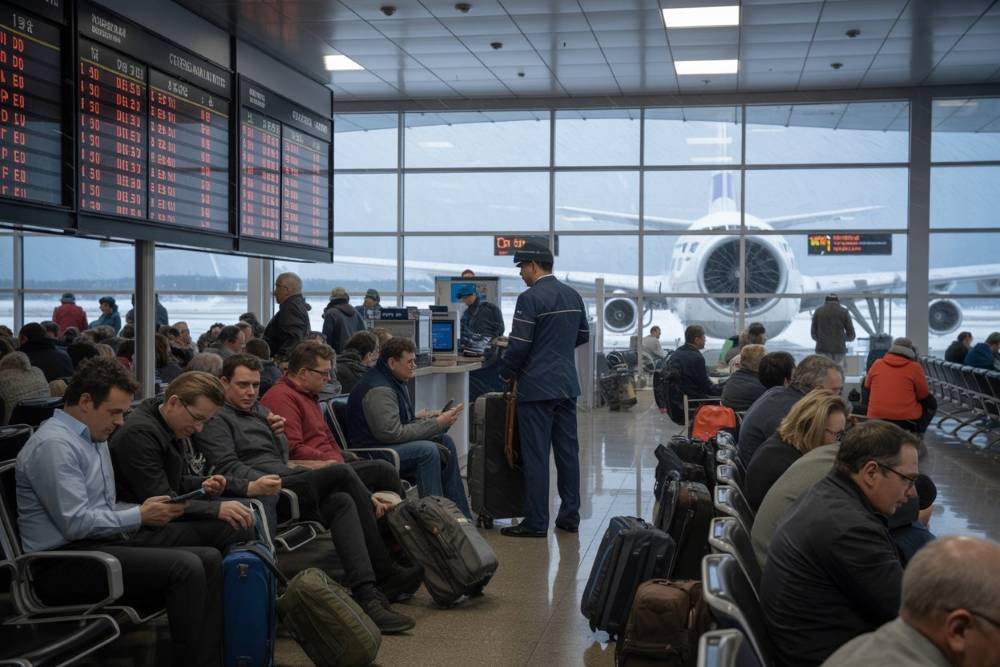
Image generated with Ai
Thousands of U.S. travelers have been left trapped as major airlines, including Delta, Southwest, American, United, and others, suspend over 690 flights and delay more than 4,000 due to severe weather, high airport volume, and operational challenges. Airports in cities such as Minneapolis, New York, Chicago, Kansas City, Atlanta, and several other major hubs are experiencing significant disruptions. These delays and cancellations are primarily caused by adverse weather conditions, including strong winds, thunderstorms, and cold fronts, as well as congestion from increased travel demand. The severe weather has led to grounding of flights and deicing procedures at major airports, further delaying departures.
Travelers across the nation are facing long waits, confusion, and the uncertainty of rescheduled flights as airlines work to manage the chaos. As airlines scramble to adjust their schedules, passengers are urged to stay updated on the status of their flights and check with their airlines for possible rebooking options.
Travel Disruptions Hit U.S. Airports with Thousands of Delays and Cancellations
Today, the United States is facing widespread disruptions in air travel, with a total of 4,247 delays and 693 cancellations within, into, or out of the country. These disruptions have impacted both major international hubs and regional airports, leaving passengers stranded and airlines grappling to manage the flow of air traffic amidst severe weather conditions.
Severe Weather and Operational Challenges Drive Delays and Cancellations
The cause of today’s widespread disruptions can be traced to a combination of severe weather systems, high airport volume, and operational hurdles due to winter storms and cold fronts. In particular, ground delays and departure delays are having the most significant impact on passengers, with some airports reporting average delays ranging from 20 minutes to over two hours. As the U.S. continues to experience storm systems and cold fronts, the situation is likely to persist for the coming days, adding further strain to an already stretched aviation network.
Advertisement
Advertisement
Airports, Cities and Airlines Affected
The following major U.S. airports have reported significant delays and cancellations due to weather-related issues and airport congestion:
- Minneapolis/St Paul Intl (MSP): Reports 110 cancelled flights and 118 delays.
- Reagan National (DCA): 88 cancellations and 114 delays.
- Chicago O’Hare Intl (ORD): 51 cancellations and 369 delays.
- Hartsfield-Jackson Intl (ATL): 57 cancellations and 246 delays.
- Seattle-Tacoma Intl (SEA): 69 cancellations and 140 delays.
- Los Angeles Intl (LAX): 41 cancellations and 148 delays.
- Orlando Intl (MCO): 26 cancellations and 348 delays.
- John F. Kennedy Intl (JFK): 24 cancellations and 192 delays.
These airports are among the busiest in the country and their disruption is causing cascading effects on travel, with passengers unable to reach their destinations or facing extended wait times for rescheduled flights. Additionally, airports like San Francisco International (SFO) and Dallas-Fort Worth Intl (DFW) are also experiencing delays, further complicating the situation.
Advertisement
Advertisement
In terms of airlines, Southwest Airlines and American Airlines have reported the highest number of cancellations and delays, with Southwest seeing 35 cancellations and 687 delays, while American Airlines experienced 20 cancellations and 513 delays. These major airlines are likely facing operational strain as they work to accommodate affected passengers and manage their schedules.
What Affected Passengers Can Do Now
For passengers affected by these disruptions, here are a few tips to mitigate the impact:
Advertisement
Advertisement
- Stay Informed: Check with your airline for real-time updates on your flight’s status. Most airlines provide notifications via mobile apps and websites, offering up-to-date information on delays and cancellations.
- Flexibility is Key: If your flight is cancelled or delayed, ask the airline about rebooking options. Many airlines are accommodating passengers with flexible rebooking policies, especially in cases of weather-related disruptions.
- Prepare for Longer Waits: If you’re at the airport, be prepared for longer waits, especially if you’re heading to or from one of the heavily impacted airports. Ensure you have snacks, a portable charger, and entertainment while you wait.
- Know Your Rights: Understand your rights when it comes to cancellations and delays. Airlines are required to offer certain accommodations, including meals and lodging, when delays extend beyond a specific time frame.
- Keep Essential Items on Hand: With the ongoing cold front affecting many regions, remember to dress in layers, keep your essentials with you, and stay warm as temperatures continue to drop.
As the U.S. aviation industry faces mounting delays and cancellations, passengers should be prepared for further disruptions and should always check with their airlines for the most current information regarding their flights. With weather conditions remaining unpredictable, air travel is expected to remain challenging for the foreseeable future.
Source: FlightAware
