
Nearly seven months ago, Ukraine reportedly offered the United States its low-cost interceptor drone, along with other sensors and air defence systems designed to counter Iranian-made attack drones. However, US officials at the time did not seem very interested and chose not to buy it. Cut to now, as a military conflict has erupted between the US and Iran and Tehran is targeting American military bases in West Asia, Washington has sought help from Kyiv.
US and Israeli strikes inside Iran have destroyed several major military targets and resulted in the death of the country’s supreme leader Ayatollah Ali Khamenei on February 28. Ever since the conflict broke out, Tehran has responded by launching drone and missile attacks against Israel and US-allied states in the Gulf, including strikes targeting American military bases. Follow US-Iran war live updates here.
ALSO READ | $20,000 drones vs $4 million air-defense: Iran’s ‘one-way’ UAVs pose math challenge to US-made Patriot
US dismissed Ukraine deal to counter Iran drones, says report
Ukrainian officials tried to sell the United States their combat-tested technology designed to bring down Iranian-made attack drones several months ago. They even prepared a PowerPoint presentation explaining how the system could help protect American troops and their allies in West Asia, Axios reported.
Notably, Ukraine is the country with the most experience in countering Shahed drones. This is because Russia has purchased these drones from Iran, produced its own versions, and deployed them in large numbers under the name Geran drones during its war against Ukraine.
In response, Ukraine has developed a low-cost interceptor drone, along with other sensors and air defence systems, aimed at stopping Shahed-type drones.
Inside the White House meeting
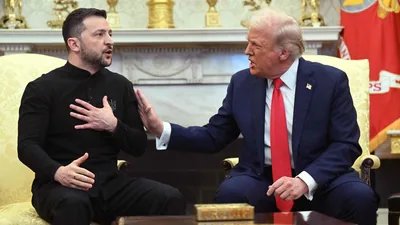
During a closed-door meeting at the White House on August 18 last year, Ukrainian President Volodymyr Zelensky proposed the use of interceptor drones to US President Donald Trump as a step towards deepening cooperation. According to one official, the move was also meant to show his gratitude for American support against Russian aggression.
Ukrainian officials presented a PowerPoint briefing to US authorities that included a map of West Asia. The presentation carried a warning that now appears prophetic: “Iran is improving its Shahed one-way-attack drone design.”
The proposal also suggested creating “drone combat hubs” in Turkey, Jordan and the Gulf states where US bases are located, to deal with threats from Iran and groups linked to it.
“We wanted to build the ‘drone walls’ and all the things necessary like the radar, et cetera,” a Ukrainian official told the media outlet. “At that meeting … in August, Trump asked his team to work on it, but they have done nothing,” the official added.
ALSO READ | New video suggests US’ Tomahawk missile may be behind Iran school attack that killed 165
What really happened? Why did the US choose not to accept Ukraine’s deal?
A US official who reviewed the PowerPoint said that Zelensky’s team had indeed shown the presentation to the administration. The official told Axios that some in the Trump administration see the Ukrainian leader as too eager to promote his country, which they believe lacks sufficient influence.
Turning down Ukraine’s proposal is now seen as one of the administration’s biggest tactical missteps since the bombing of Iran began on February 28, two US officials told Axios.
“If there’s a tactical error or a mistake we made leading up to this [war in Iran], this was it,” an official acknowledged.
Iran’s low-cost Shahed drones have been linked to the deaths of seven US service members. Efforts to intercept these drones have also cost the US and its regional partners millions of dollars.
Now, Ukraine sends interceptor drones, experts to protect US bases
Jump to today, the United States appears to have accepted Ukraine’s proposal. Zelensky said that interceptor drones and a team of drone specialists have been sent to help defend US military bases in Jordan.
According to him, the US asked for help on Thursday, and the Ukrainian team left the following day, he told The New York Times. “We reacted immediately. I said, yes, of course, we will send our experts.”
Ukraine has also deployed air defence teams to Qatar, the United Arab Emirates and Saudi Arabia to support their efforts against Iran’s aerial attacks, Zelensky told reporters.
He said the presence of Ukrainian pilots was important for the success of interceptor drone operations.