
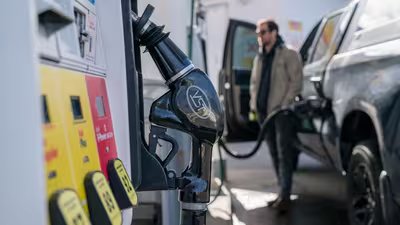
As crude oil prices climbed past $110 a barrel on Monday, levels last seen in 2022, people across the world began to feel the impact of the US-Iran war and the damage it has caused to global energy supply. Governments in several parts of the world moved to deal with the crisis as panic spread among the public over rising petrol, diesel and energy prices.
Petrol, diesel and jet fuel are produced from crude oil. When crude prices rise, the cost of these commonly used fuels also increases. These fuels are needed to run equipment, cars, buses, delivery trucks and aircraft. Follow Iran-US war live updates here.
ALSO READ | Oil prices, drone attacks: Key updates as US-Iran war enters day 10
Many countries have increased efforts to avoid fuel shortages. The near closure of the Strait of Hormuz has pushed Saudi Arabia, the world’s largest oil exporter, to cut output, according to reports. Similar steps have also been taken by the United Arab Emirates, Kuwait and Iraq.
Here’s a country-wise breakdown of the efforts being taken:
INDIA
India has asked refineries to increase production of LPG for household use. In a statement issued Monday, the ministry of petroleum and natural gas (MoPNG) said oil refineries had been directed to raise output.
“In light of current geopolitical disruptions to fuel supply and constraints on supply of LPG, Ministry has issued orders to oil refineries for higher LPG production and using such extra production for domestic LPG use,” the statement issued on X read.
MoPNG also said a committee of three executive directors from oil marketing companies (OMCs) has been formed to examine LPG supply for restaurants, hotels and other non-domestic sectors.
ALSO READ | India weighs options to escort stuck ships out of choked Strait of Hormuz
VIETNAM
Vietnam’s trade ministry has urged businesses to allow employees to work from home to help cut fuel use amid supply problems and rising prices linked to the Iran war.
The government said in a statement on Tuesday that Vietnam has been among the countries most affected by fuel disruptions since the US-Israeli war on Iran began.
SOUTH KOREA
South Korea, which relies heavily on trade and imported fuel, has raised concern over Iran’s attacks on energy infrastructure and efforts to shut the Strait of Hormuz, a route that carries about one-fifth of the world’s oil trade.
President Lee Jae Myung said on Monday that the government will place a cap on domestic fuel prices for the first time in almost 30 years to curb price increases.
He said South Korea will also search for energy supplies that do not pass through the Strait of Hormuz.
PAKISTAN
Pakistan has introduced fuel-saving steps after oil prices crossed $100 and gas supplies from the Middle East were disrupted, leading to panic buying in the import-dependent South Asian country.
Prime Minister Shehbaz Sharif announced more than one dozen austerity measures on Monday to handle the global fuel crisis caused by the conflict.
These include cutting the workforce by half and shifting to a four-day working week. For the next two months, government spending will be reduced by 20%, and fuel for government vehicles will be cut in half.
The steps were announced after the government increased fuel prices on Saturday by 55 rupees (20 cents), the largest rise recorded in the country.
ALSO READ: What’s at stake for India in the Strait of Hormuz | Number Theory
CHINA
China increased crude purchases during the first two months of the year as it continued building oil reserves to prepare for possible supply disruptions.
The extra oil is being stored in commercial and strategic reserves that could be used if the US-Israeli war against Iran continues for a long period.
Beijing also asked refiners to stop signing new fuel export contracts and try to cancel shipments already agreed, news agency Reuters reported, citing people with knowledge of the matter.
JAPAN
Japan’s government has asked a national oil reserve site to get ready for a possible crude release, a senior member of parliament said Sunday.
Akira Nagatsuma, a member of the Centrist Reform Alliance opposition party, told Reuters that an official from the Japan Organization for Metals and Energy Security (JOGMEC) at the Shibushi national oil storage base said the order came on Friday from the Agency for Natural Resources and Energy (ANRE).
EGYPT
Egypt increased the prices of several fuel products on Tuesday, the petroleum ministry said, as countries in the region continue to face rising global oil and gas prices.
“This comes in light of the exceptional situation resulting from the geopolitical developments in the Middle East region and their direct effects on global energy markets”, the ministry said in a statement.
The price of diesel, one of the most widely used fuels in the country, rose by 3 Egyptian pounds to 20.50 Egyptian pounds ($0.3887) from 17.50 pounds.
BANGLADESH
Bangladesh carried out inspections on Sunday to check fuel stock levels, the country’s energy ministry said.
Authorities in Dhaka also introduced fuel rationing on Sunday, placing limits on how much fuel certain vehicles can buy, amid panic buying and hoarding after warnings of possible supply disruptions.
From Monday, the government also shut all universities and advanced the Eid al-Fitr holidays as part of emergency measures to conserve electricity and fuel amid the growing energy crisis linked to the conflict.
With inputs from agencies