
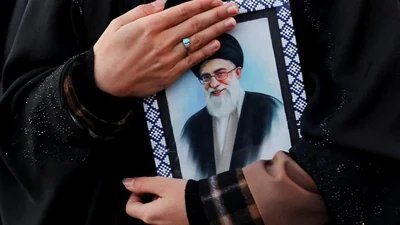
US President Donald Trump has said that the American and Israeli airstrike that killed Iran’s Supreme Leader Ayatollah Ali Khamenei on Saturday also killed the men the United States had identified as his most likely successors, leaving no clear picture of who will lead the Islamic Republic next.
Follow: Live updates on the US-Iran conflict
Trump made the remarks in a phone interview with US-based channel ABC News’ Chief Washington Correspondent Jonathan Karl on Sunday night. “The attack was so successful it knocked out most of the candidates,” Trump said, as per Karl on X, “It’s not going to be anybody that we were thinking of because they are all dead. Second or third place is dead.”
Trump had initially told Karl that the US had a good idea of what Iran’s new leadership would look like. As the conversation continued, he reversed course, saying the strike had eliminated those very people.
Iran’s judiciary confirmed that Ali Shamkhani, a top adviser to Khamenei, and General Mohammad Pakpour, the head of the Islamic Revolutionary Guard Corps, were among those killed in the US-Israel attack on Khamenei’s compound in central Tehran.
Four members of Khamenei’s family, including his daughter and a grandchild, also died.
The Pentagon, which has named the operation ‘Epic Fury’, said three American soldiers were killed and five seriously wounded.
With the most prominent candidates gone, it is now unclear who will emerge as the next leader.
Under Iran’s constitution, a temporary council comprising President Masoud Pezeshkian, the head of the judiciary, and a senior cleric from the Guardian Council will hold the supreme leader’s powers in the interim. The cleric is Ayatollah Alireza Arafi, seen as the interim leader now. There’s been chatter online about Arafi’s fate too, as he has made no public appearances or addresses so far.
Ali Larijani, Secretary of the Supreme National Security Council, has become one of the few senior figures with both authority and visibility in Tehran in the days since the attack.
Iran’s constitution bars political factions that do not accept the Islamic Republic or the institution of the Supreme Leader, leaving no formal opposition that could present an alternative.
Reza Pahlavi, son of the deposed Shah or king, has drawn attention as a figurehead among protesters, but has received no public support from the Trump administration. He continues to give interviews to American and other news outlets, speaking of himself as a potential new ruler positioned essentially as a US proxy.