
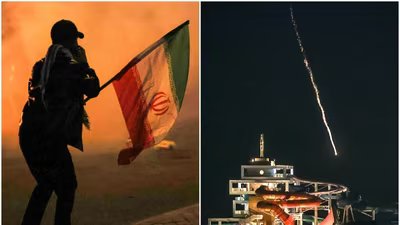
A military confrontation between the United States, Israel and Iran has spiralled into a broader regional conflict with direct attacks and retaliations stretching across the Middle East. What began as heavy US and Israeli strikes on Iranian military targets – including the killing of Iran’s supreme leader Khamenei – has prompted a series of missile and drone barrages from Iran, pulled in allied armed groups like Lebanon’s Hezbollah, triggered attacks on US forces and Gulf partners, and rattled global markets amid fears of a wider war. (Live Updates)
Here are the 10 top developments on the US-Israel-Iran war:
1. Hezbollah strikes Israel in response to Iran’s leader’s death
Lebanon’s Iran-aligned Hezbollah said it launched rockets and drones overnight at Israeli territory, framing the assault as revenge for the killing of Iran’s Supreme Leader and in defence of Lebanon.
2. Supreme Leader Khamenei killed in joint US-Israeli offensive
Iran’s state media and international reports confirmed the death of Ayatollah Ali Khamenei during coordinated strikes by US and Israeli forces, marking a profound escalation in hostilities.
3. Massive US and Israeli campaign ongoing
The United States and Israel have struck over 1,000 Iranian targets including leadership, missile infrastructure and air defence systems as part of the broad offensive — described by US leaders as necessary to eliminate threats.
4. Iran hits back across region
In retaliation, Iran launched ballistic missiles and drones targeting Israel itself and US and allied military bases in Gulf states, representing one of the widest Iranian responses in decades of regional tension.
Track Latest Updates on Iran attacks in UAE here
5. Casualties mount on all sides
Iran reported hundreds killed in strikes on its territory, including reported civilian casualties; Israeli authorities have confirmed deaths from Iranian attacks; and US Central Command acknowledged the first US soldiers killed in the wider campaign.
6. Power vacuum and uncertainty in Tehran
With the supreme leadership gone, Iran’s provisional governing council has begun operating amid a high-stakes succession process, with looming questions about internal stability and regime continuity.
7. Gulf states reel from conflict spillover
Iran’s retaliation saw missiles and drones reaching Gulf countries hosting US forces, leading to interceptions, minimal debris casualties and heightened regional defence postures.
8. Global economic ripple effects intensify
Conflict pressures on shipping routes — especially around the Strait of Hormuz — and disrupted airspace have snarled global travel and trade, triggering warnings of higher energy costs.
9. Western allies show mixed responses
Britain, France and Germany signalled readiness to protect regional interests and counter Iranian strikes, even as other world powers like Russia and China condemned the killing and urged de-escalation.
10. Calls for dialogue amid war fears
Despite intense fighting, some diplomatic voices advocate for renewed talks, emphasising that war should not extinguish hope for peace, even as hostilities continue.