
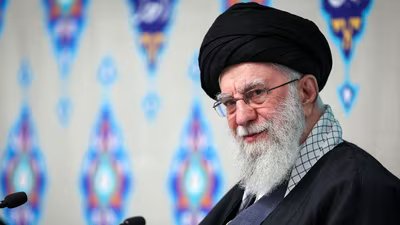
The US and Israel launched strikes on Iran on Saturday. Iranian media, quoted by the AP, said that one of the first explosions was heard near the office of Iran’s supreme leader, Ayatollah Ali Khamenei.
Witnesses said the first blast occurred near Khamenei’s office compound. Iranian state television confirmed that an explosion had taken place but did not give details about the cause. Authorities closed roads leading to the compound, shut down the country’s airspace and disrupted mobile phone services.
Targets and rising tensions
Reuters, citing sources, reported that the 86-year old Khamenei was not at his office when the strikes happened and had been moved to a secure location outside Tehran. He has not appeared in public in recent days as tensions with the United States increased.
According to the AP, Israel targeted military bases, government buildings and intelligence centres. The strikes happened as the US increased its military presence in the region and tensions rose over Iran’s nuclear programme.
Khamenei, who has led Iran since 1989, is the longest-serving head of state in the Middle East. Any removal or serious injury or death would lead to only the second leadership change since the 1979 Islamic Revolution and could mark a major turning point for the Islamic Republic.
Also Read: US attacks Iran LIVE: Drone strikes Kuwait airport, UAE says ‘new wave of missiles’ detected
How Iran chooses their supreme leader
Under Iran’s constitution, the Assembly of Experts chooses and oversees the supreme leader. This group has 88 clerics and is elected through a strictly controlled system. The candidates for the Assembly are approved by the Guardian Council, whose members are directly or indirectly chosen by the supreme leader.
After the death of the Islamic Republic’s founder, Ruhollah Khomeini in 1989, Ayatollah Ali Khamenei became the supreme leader after serving as president. Since then, the process of choosing a successor has been handled quietly within the country’s leadership.
A recent report by the US think tank Council on Foreign Relations listed several names that are often mentioned as possible successors.
Names being discussed
Hojjat-ol-Eslam Mohsen Qomi
Mohsen Qomi is a close adviser to Ayatollah Ali Khamenei. As a trusted insider, he is seen as someone who could help maintain stability.
Ayatollah Alireza Arafi
Alireza Arafi is a senior cleric and a member of both the Guardian Council and the Assembly of Experts. He also leads Iran’s seminary system. According to the Council on Foreign Relations, his appointment would likely continue the current system.
Ayatollah Mohsen Araki
Mohsen Araki is a senior member of the Assembly of Experts. He has strong religious credentials and is often mentioned in succession discussions.
Ayatollah Gholam Hossein Mohseni Ejei
Mohseni Ejei heads Iran’s judiciary and has held key security and government roles. His experience could be important during uncertain times.
Ayatollah Hashem Hosseini Bushehri
Bushehri is the Friday prayer leader in Qom and a member of the Assembly of Experts. He is also considered among possible successors.