The assault has been a while in the making. Pakistan is fed up with the Afghan Taliban, a group it once sheltered and aided, accusing the group, which has ruled the country since 2021, of harbouring and supporting its ideological cousins, the Pakistani Taliban (TTP). The TTP have unleashed a wave of violence in Pakistan in recent years. Though Pakistan exaggerates the degree of control the Afghan government exercises over its fellow-Talibs, at a minimum the Afghans Taliban look the other way.
In October, after the last round of fighting, Qatar and Turkey mediated a ceasefire. That broke down on February 21st when a TTP suicide bomber killed two Pakistani soldiers, including a lieutenant colonel, in southern Khyber Pakhtunkhwa, a province in the north-west of the country. Hours later Pakistan launched airstrikes in Nangarhar and Paktika provinces in eastern Afghanistan, claiming that it had killed 70 TTP militants.
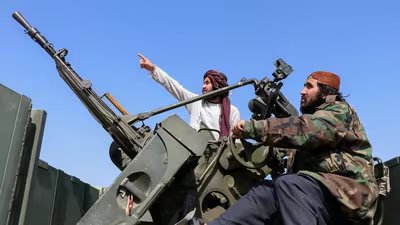
But the Afghan government said that civilians had been killed in the Pakistani strikes and vowed revenge. That came on February 27th. The Afghans attacked Pakistani troops along the border, claiming to have overrun a number of border posts and to have killed 50 Pakistani soldiers. Pakistan, which acknowledged only 12 fatalities, launched Righteous Fury in response. The Taliban, which lacks a working air force, is reported to have launched drone strikes over the border. Friendly countries including Saudi Arabia, Russia, China and Iran are rushing to council restraint, as is the United Nations.
Pakistan and Afghanistan have now clashed in four of the past five years. Last year’s cross-border fighting was nipped in the bud. But the scale of violence this week and the unaddressed grievances—Pakistan wants TTP sanctuaries in Afghanistan dismantled; the Afghan government bristles at Afghan territory being bombed—makes outside intervention harder this time. “The relationship has never been worse,” says Abdul Basit, a terrorism expert. “This is almost the breaking point.”
Militant violence in Pakistan is the worst it has been for a decade, and has increased every year since the Taliban takeover in Afghanistan in August 2021. On February 6th a suicide bomber killed 32 people and injured at least 170 at a Shia mosque in the capital, Islamabad. Pakistan has said the “planning, training and indoctrination” for the attack was done in Afghanistan. Responsibility for the attack was claimed by Islamic State Pakistan Province, a branch of Islamic State.
Meanwhile, the border between Afghanistan and Pakistan has been closed since October. Cross-border trade had anyway been plummeting before that. In the first seven months of the fiscal year starting in July, Pakistan’s imports from and exports to Afghanistan fell by around four-fifths. Most of the official movement across the border is now one-way: Afghan refugees sent home by Pakistan. Over 2m people have been deported since September 2023. In January over 77,000 were sent back, according to the UN’s refugee agency. Approximately 2m Afghans still remain in Pakistan.
Each side is offering strident rhetoric. Afghanistan’s army chief has promised “an even stronger and more decisive response” to future air strikes. Pakistan can “crush any aggressor”, boasted Shehbaz Sharif, Pakistan’s prime minister. Mr Asif’s threat of open war seems to hint at regime change. Pakistan has military superiority over the Afghan Taliban. But toppling them would be extremely hard to do, and would besides have unpredictable consequences. “It would be a bigger disaster,” says Mr Basit, “because then the TTP and [Afghanistan’s Taliban] would be together”.