
The Academy Awards have a rule that forbids an actor from being nominated twice in the same year within the category, but the same does not apply to directors. A filmmaker could theoretically be nominated twice for Best Director for two different films within one year, but it’s not even considered to be a remote possibility given how rare it is for someone to debut two releases in a twelve-month period; it’s even more rare that they’re both great. While the one exception to this rule was Michael Curtiz back in 1930, Steven Soderbergh earned two nominations at the 73rd Academy Awards. While Erin Brockovich was the bigger financial hit and earned Julia Roberts the Best Actress prize, Traffic earned Steven Soderbergh the Best Director Oscar, which was considered to be somewhat of an upset, considering that Gladiator won Best Picture. Although it’s both surprising and a bit upsetting that Soderbergh hasn’t been nominated since, his reward for Traffic couldn’t have been more deserving.
Soderbergh has made both great and disastrous films, but there’s not a single one of his projects that is lacking in experimentation. Traffic took a novel approach to the drug war by telling three interlocking stories that painted a disturbing portrayal of the institutional failure to prevent the cartels from growing in power, which only led to an increased issue of addiction. Soderbergh has long been fascinated with the roles that people play in systems, and Traffic is as emotional, heartbreaking, and infuriating as his films can get. While Soderbergh hasn’t lost a beat in the 25 years since Traffic was released, it may remain the single most impressive undertaking of his career.
‘Traffic’ Is a Sprawling, Ambitious Crime Epic
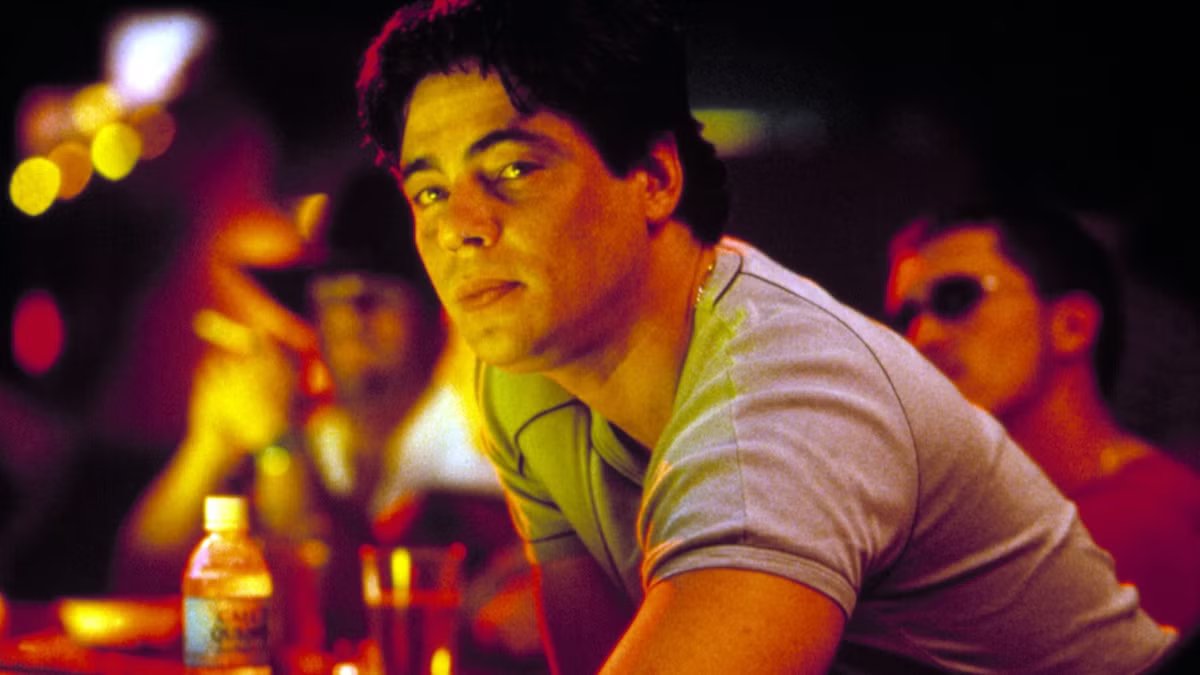
Traffic is a rarity for an ensemble drama because all the storylines in the film are compelling, and there aren’t any weak links in the cast. The film’s storylines include the Mexican cop Javier Rodríguez Rodríguez (Benicio del Toro) trying to save his community by pursuing the cartels, the judge Robert Wakefield (Michael Douglas) discovering that his daughter Caroline (Erika Christensen) has become an addict, and the dealer Eduardo Ruiz (Miguel Ferrer) avoiding danger after he rats out on members of a criminal gang to federal agents.
Soderbergh has long been interested in the perception of movie stars in his films, and Traffic featured subversive roles for many great actors. Del Toro, who was at the time best known for his work as a slimy criminal in The Usual Suspects, ended up winning the Oscar for Best Supporting Actor for playing an altruistic hero who realizes that he has leverage that might end up benefitting other displaced people. Douglas, who had spent most of the ‘90s playing romantic leads and sexual deviants, got to change his image by playing a conservative politician who is forced to reckon with the plasticity of his anti-drug rhetoric.

Steven Soderbergh’s ‘Black Bag’ Has a Cast of Greats, but It’s a Relative Newcomer that Stands Out
Marisa Abela’s highly charismatic yet vulnerable performance makes her the most interesting member of the stacked ‘Black Bag’ cast.
Traffic is an impressive achievement in casting because every character has a meaningful impact on the story, regardless of how much screen time they have. Don Cheadle, who Soderbergh had worked with on Out of Sight and would cast again in the remake of Ocean’s Eleven, is remarkable as a DEA agent who gets tasty after spending too much time undercover. He was also clever enough to cast well-known legends of New Hollywood to play figures of authority, including James Brolin as a former judge and Albert Finney as the White House Chief of Staff. By selecting actors that the audience was familiar with, Soderbergh was able to call attention to characters who were supposed to represent the old guard of power. He also got the opportunity to cast up-and-coming stars in roles that showcased their range; Topher Grace had been a sitcom star thanks to That ‘70s Show, but his brief role in Traffic as one of Caroline’s dubious friends helped him kick off a second career as a character actor.
‘Traffic’ Shows What Steven Soderbergh Does Best
Traffic is a bracingly cynical film that is impressive because it finds a way to criticize the faults of a system without singling out individuals. It would have been easy for Soderbergh to point to over-the-top cartel lords or feckless politicians as the root of all the problems involved in the failed “War on Drugs,” but he instead examines the way that the cycle of violence creates little room for evolution. The expenses put into law enforcement give the FBI more incentive to track down cartel lords, who, in turn, get more agitated and gain power because they are able to take advantage of underprivileged communities that don’t receive government funding that’s gone back to law enforcement. The increased pressure that conservative politicians put on politics that demonize even casual drug users creates an atmosphere of paranoia that makes more potential addicts susceptible to misinformation and prone to finding illicit means to acquire products.
There’s a depth and complexity to Soderbergh’s direction that predates what he would eventually do on television, but each mini-narrative in Traffic still feels like a complete story with three acts. The wisdom that Soderbergh had about the lack of empathy and polarization that caused increased violence has only grown more prevalent with age, with some of his truisms even feeling a bit eerie. Traffic might not be as entertaining as Ocean’s Eleven, as empowering as Erin Brockovich, as thematically intricate as Solaris, as hilarious as The Informer, or as crowd-pleasing as Logan Lucky, but it embodies the thoughtfulness, technical skill, and pure bravura that make Soderbergh one of the greatest directors working today, and maybe ever.
Traffic is available to stream on Netflix in the U.S.

- Release Date
-
December 27, 2000
- Runtime
-
147 Minutes
- Director
-
Steven Soderbergh
- Writers
-
Simon Moore, Stephen Gaghan