
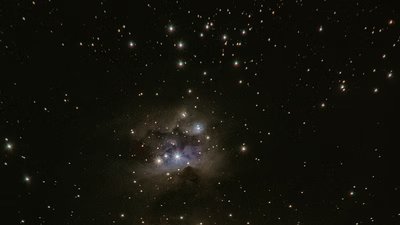
Skywatchers are in for a treat this week as six planets — Mercury, Venus, Neptune, Saturn, Uranus and Jupiter — are set to appear together in the evening sky on Saturday, February 28.
Shortly after sunset, the planets will seem to gather on one side of the Sun in what astronomers call a “planetary parade.”
According to NASA, “On February 28, we will see not one, not two, but six planets in the evening sky.” While the planets will not form a perfectly straight line, they will reportedly appear clustered closely in the same region of the sky, creating a striking visual display.
Four planets visible to naked eyes
Of the six, four — Mercury, Venus, Jupiter and Saturn — are expected to be visible without telescopes or binoculars, provided skies are clear.
The remaining two, Uranus and Neptune, will require optical aid. NASA noted that “Four of those planets will be visible to the unaided eye, weather permitting, but only those with optical assistance will be able to view Uranus and Neptune.”
Mercury, too, can sometimes be harder to spot, the space agency added.
Such large groupings are not an everyday occurrence. While it is common to spot two or three planets after sunset, bigger gatherings are rarer.
Another sky event to watch in June
The celestial calendar has more in store this year. On June 8-9, Venus and Jupiter — the two brightest planets visible from Earth — will appear extremely close together in what is known as a conjunction, according to NASA.
The pair will seem separated by only about the width of a pinky finger held at arm’s length, and no telescope will be needed to enjoy the view.
How to tell a planet from a star
For those stepping out to catch the parade, there’s a simple way to distinguish planets from stars. “If it’s twinkling, it’s a star. If it is not twinkling, it’s a planet,” planetary scientist Sara Mazrouei with Humber Polytechnic in Canada told Fox10 TV.
The planetary parade is expected to remain visible over the weekend and in the days that follow. However, Mercury will gradually slip lower in the sky and eventually dip below the horizon, making it harder to see.