
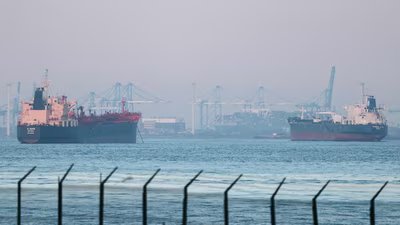
Layers of Western sanctions and a recent rash of ship seizures represent the toughest suite of measures brought to bear against the so-called shadow fleet of vessels smuggling illicit oil across the globe.
Action by the U.S. and its allies against the ghost network, which has bankrolled the Kremlin’s invasion of Ukraine and supplied discounted oil to China and India, has driven up the cost and risk for the fleet’s operators. The U.S. is now seizing tankers as far away as the Indian Ocean in its pursuit of shadow vessels.
But as the number of tankers carrying Russian, Iranian and Venezuelan oil has expanded over the past four years, the methods used to disguise their routes, identities and cargo have become more elaborate—making shutting down the network completely a gargantuan task.
Shadow fleet ships, usually old, sailing under false flags and sanctioned, accounted for 6% to 7% of the global crude oil flows in 2025, according to ship-data firm Kpler. Russia last year relied on the fleet to transport around 80% of its crude and oil products, analysts estimated.
Western sanctions and recent interceptions have raised the cost for Russia and Iran of exporting their oil via the dark fleet, and made it more difficult to sell on.
There are around 300 million barrels of Russian and Iranian oil at sea, according to ship tracker Vortexa. Traders are struggling to find buyers—who have become hesitant as sanctions have piled up—particularly given the ample supply in global markets.
A quasi blockade by the U.S. has largely shut off Venezuelan oil from China and Cuba—the major users of shadow tankers to transport the crude. The Trump administration’s threat of extra sanctions on India for buying Russian oil has seen New Delhi reduce its purchases of Moscow’s crude. India’s coast guard said it had seized three sanctioned tankers off its shores this month, the first time it is known to have intercepted shadow-fleet vessels.
Still, together, Russia and Iran are responsible for over 11% of the world’s oil production, meaning that expunging them from the global oil trade would be challenging. The sheer number of shadow tankers and the means they have to avoid detection are among the difficulties. Removing Russia and Iran from the market would also likely raise the price of crude and increase inflation—an especially sensitive topic in the U.S. ahead of midterm elections.
Staying in the shadows
Ship-to-ship transfers, in which one ship empties—or partially empties—its crude oil into the tanks of another, often in the middle of the ocean, enable crews to conceal the origin of the cargo. The practice has doubled in frequency over the past year.
So-called dark-port calls, when crews turn off the ship’s Automatic Identification System, mean vessels can enter and exit a harbor without leaving a trace.
Some crews conjure ghost ships by falsifying the vessel’s AIS transmissions and creating fake names—so the real ship can conduct illicit operations elsewhere.
Another popular method of deception is to adopt a false flag or flag of convenience. Smaller, non-Western nations often outsource their shipping registry to third parties with less-stringent checks. Some countries offer sweeteners to shipowners such as cheaper registration fees or lower taxes.
This is how the deception techniques work in practice.
Shadow fleet routes sometimes appear to run across land. That is the result of gaps created in a ship’s voyage when the AIS is switched off, or when the crew spoof a vessel’s location.
A complex web of holding companies hides the ultimate ownership of the tankers. Here are some of the other characteristics of typical shadow-fleet ships.
Graphics sources: Sanctions Hub of Excellence at KSE Institute (Russian crude oil exports); Vortexa (oil on water); TankerTrackers.com (shadow fleet); Kpler (number of shadow fleet engaged in deceptive behaviors); MarineTraffic (locations, routes of tankers)