
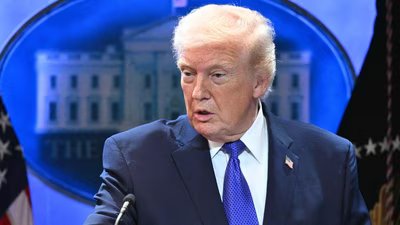
Washington/New Delhi: The US Supreme Court struck down President Donald Trump’s sweeping tariff regime in a 6-3 ruling on Friday — and within hours, Trump said he would sign a fresh executive order imposing a 10% global tariff under Section 122 of the Trade Act of 1974, moving to replace the legal architecture the court had just demolished.
Trump also confirmed that all existing Section 232 national security tariffs and Section 301 tariffs would remain fully in force, and announced the initiation of fresh Section 301 investigations into the trading practices of multiple countries. The ruling, and Trump’s immediate countermove, together mean that while the legal basis for the tariffs has shifted, the tariffs themselves have not gone away — at least not fully.
The Supreme Court had ruled that the International Emergency Economic Powers Act (IEEPA) of 1977 — which Trump had used since April 2025 to impose sweeping tariffs on nearly every US trading partner — did not authorise the President to levy tariffs, a move the court said was illegal.
The ruling is still a blow for the Trump administration.
Also Read | Trump attacks Supreme Court justices over tariff ruling: ‘Embarrassment to their families’
Estimates of the tariffs paid range from $129 billion to $175 billion — the lower figure from US Customs and Border Protection data through December 10, the higher from Penn-Wharton Budget Model economists.
US businesses that imported merchandise had started filing suits seeking refunds in December, in anticipation of an adverse ruling. The refund process is unlikely to be swift. Those who sued early will likely be repaid more quickly, while companies face the challenge of reconstructing detailed import data across multiple tariff regimes applied at different times.
Trump said that the trade deal with India, an initial framework for which was announced earlier this month, will not change.
India’s commerce ministry did not immediately respond to the ruling, but around the world, countries reacted with a mix of relief, resignation over the belief that the Trump administration would now try something else, and uncertainty over what comes next.
In the press briefing, Trump lashed out, calling the ruling “deeply disappointing”. He said he was “ashamed of certain members of the court for not having the courage to do what’s right for our country,” calling the majority justices “fools and lap dogs for the RINOs and the radical left Democrats” who were “unpatriotic and disloyal to our Constitution.” The ruling was 6-3 against Trump.
Earlier, Canada’s minister for trade with the United States, Dominic LeBlanc, said the ruling “reinforces Canada’s position that the IEEPA tariffs imposed by the United States are unjustified,” adding that Canada would continue working to “create growth and opportunities on both sides of the border.”
The European Union, America’s largest trading partner, said it was “carefully” analysing the ruling. “We remain in close contact with the US Administration as we seek clarity on the steps they intend to take in response to this ruling,” said Olof Gill, the European Commission’s trade spokesman. “These arbitrary tariffs have created chaos for small businesses and caused prices for nearly everything to skyrocket, all while doing next to nothing to protect American workers. They have also been weaponised to torpedo relationships with close US partners like India and Brazil at the literal expense of the American taxpayer,” said Congresswoman Sydney Kamlager-Dove, a Democrat.
On April 2, 2025, Trump had levied tariffs of between 10% and 145% on countries, terming the day Liberation Day. The baseline rate of 10% applied to nearly all trading partners, with dozens of nations — including India at 26% — facing higher rates. China was eventually hit with a combined rate of 145%. Soon after, countries started signing trade deals with the US to secure more advantageous tariffs. The UK was the first.
India eventually closed what both sides called a framework for a deal with the US in early February, and Trump issued an executive order removing the punitive 25% tariff he had levied on India’s merchandise exports in August, as punishment for India buying Russian oil.
The US also agreed to reduce the retaliatory tariffs from 25% to 18%, and Indian officials had expected this to happen this week. In return, India reserved tariffs on many US goods, agreed to restrict imports of Russian oil, and said it would buy $500 billion of US goods over five years. That deal, which was to be signed in late March, has now been rendered redundant by the Supreme Court’s order.
The durability question looms large for all of Washington’s trading partners. “What countries and companies are going to be thinking is how durable the President’s next move on tariff policy will be — will whatever new programme they use also be temporary and elastic in nature? Does this change the calculus with all of those deals the President put together with some 50-odd countries? I don’t think this changes much, because the US trade representative will simply rip and replace IEEPA with Section 301 tariffs. Those tools are targeted, they’re durable, and they’re easy to roll out,” said Samir Kapadia, managing principal of the Vogel Group and founder of India Index.
Although the tariffs did not cause a recession in the US economy as initially feared, studies have shown that small businesses and consumers bore the brunt of the higher tariffs. A recent Federal Reserve Bank of New York analysis found US businesses and consumers paid for nearly 90% of the levies in 2025.
As US tariffs bit deeper through 2025, India steadily redirected exports toward alternative markets. China emerged as the second fastest-growing major export destination after Spain, with Indian shipments to Beijing surging over 33% and 42% in September and October respectively — the months that bore the full brunt of a 50% combined tariff on Indian goods entering America. The UAE, Russia and Spain also absorbed higher volumes, cushioning the blow from Washington’s escalating levies.
Europe then stepped up as the pivotal market in November, with Indian merchandise exports to the region crossing $7.9 billion — a 14.27% annualised jump after a dip the previous month. The gains were broad-based: exports to the UK rose 15% to $1.1 billion, Germany climbed nearly 25% to $980 million, and Spain surged 180% to $893 million. France and Belgium added 65.7% and 31% respectively.
The court ruling may be positive for the rupee. The Bloomberg Dollar Spot Index fell 0.2% on Friday, trimming this week’s gain to 0.6%.
“This should be marginally positive for EM FX, mostly because it underscores the policy uncertainty out of the US,” said Alvaro Vivanco, emerging markets macro strategist at Wells Fargo.
US Treasury yields climbed . The yield on benchmark US 10-year notes rose 1.1 basis points to 4.086%, from 4.075% late on Thursday. Gold prices rose. US Treasury yields climbed after the ruling as traders focused on the revenue implications, with the yield on benchmark 10-year notes rising 1.1 basis points to 4.086%. US stocks swung between gains and losses as investors weighed fourth quarter GDP data.