
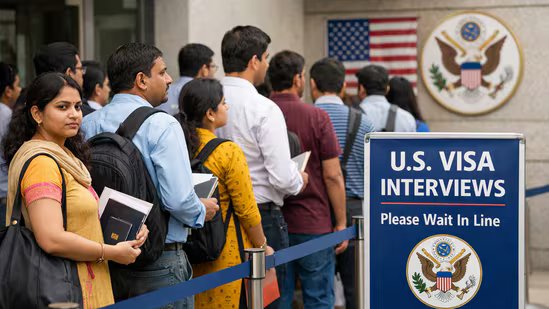
The United States has expanded its visa screening process to include comprehensive online presence checks for all H-1B and H-4 applicants worldwide, a move officials say is aimed at curbing abuse of the work visa programme while safeguarding national security.
In a post on X, the US Embassy India announced a “worldwide alert” for H-1B and H-4 visa applicants, stating that from December 15 the Department of State has broadened online reviews as part of standard visa screening. The measure applies globally to applicants of all nationalities seeking these visas.
According to the embassy, the expanded vetting is intended to address alleged misuse of the H-1B programme while still allowing US companies to recruit “the best of the best” temporary foreign workers.
While embassies and consulates continue to accept and process applications, applicants have been advised to apply early and be prepared for longer processing times.
Crackdown on abuse, focus on security
The announcement comes amid a wider US crackdown on perceived abuse of the H-1B system and heightened scrutiny linked to illegal immigration and national security concerns.
The H-1B visa is extensively used by American technology firms, and Indian professionals – particularly in technology and healthcare – make up one of the largest groups of recipients.
Indian authorities have acknowledged the shift. In a written reply to the Rajya Sabha, Minister of State for External Affairs Kirti Vardhan Singh said the US administration now treats “every visa adjudication as a national security decision,” reiterating Washington’s stance that a US visa is “a privilege, not a right.”
Interviews postponed, applicants stranded
The expanded vetting has had immediate consequences. Thousands of pre-scheduled H-1B interviews in India from December 15 onwards were abruptly postponed by several months.
Applicants who had already travelled to India for renewals have found themselves stranded without valid visas to return to their US jobs.
Some applicants scheduled for mid-December interviews were rescheduled to March or even late May.
Immigration lawyers told the Washington Post that cancellations between December 15 and 26 coincided with the rollout of the new social media vetting policy and the US holiday season.
“This is the biggest mess we have seen,” said immigration attorney Veena Vijay Ananth, noting uncertainty over timelines. Houston-based lawyer Emily Neumann said at least 100 of her clients were stuck in India, while others questioned how long employers would wait for delayed returns.
Social media checks expanded
US officials say online presence checks are not new. The State Department has long reviewed social media for student and exchange visas (F, M and J categories).
From December 15, the same scrutiny now covers H-1B workers and their H-4 dependents. Earlier this year, applicants for certain visas were also asked to make social media accounts public to facilitate identity and admissibility checks.
A State Department spokesperson said embassies are now prioritising “thoroughly vetting each visa case above all else,” even if it means longer waits.