
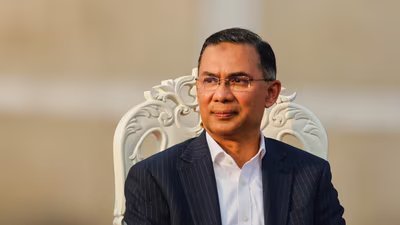
After two years of political turmoil, Bangladesh has elected a new government which marks the return of the Bangladesh Nationalist Party (BNP) after 20 years.
The Bangladesh national elections were held on February 12, 2026. This was also the first election to be held after the 2024 student uprising toppled the Sheikh Hasina government.
In the 13th National Parliamentary Election, the Bangladeshi people gave their verdict and made BNP’s Tarique Rahman the next prime minister.
With Rahman’s return to Dhaka, Bangladesh will now mark the beginning of a new political era.
From the very first moment of the new BNP government, Bangladesh saw a break from tradition. The swearing-in ceremony for Rahman and the new cabinet was held at South Plaza of the Parliament complex, instead of official Bangabhaban residence.
Along with the prime minister, 25 ministers and 24 state ministers were sworn in, ready to set a fresh path for Bangladesh.
Rahman’s landslide victory in the general elections also marked the return of the BNP in office after 20 years. The Bangladesh Nationalist Party is among the key parties in the country and has served as the opposition during Sheikh Hasina’s long tenure.
Bangladeshi media have also hailed the results with the return of political balance in the country.
With 209 seats with the BNP, Jammat-e-Islami emerged as the principal opposition party with 68 seats.
What is BNP’s plan for the new Bangladesh?
As mentioned in the party manifesto, BNP under Rahman aims to stabilise the economy of Bangladesh. Ahead of his election, Rahman addressed thousands of supporters in Bangladesh and vowed to build a Bangladesh “we dream of.”
The BNP chief also took a secular push and vowed to work towards the safety of all religions and minorities in Bangladesh. This stance came amid a rush in attacks on minorities, especially Hindus, across the country.
Foreign policy also remains a key focus for Rahman as he aims to implement a policy called “Bangladesh Before All.
“The interests of Bangladesh and its people will determine our foreign policy,” Rahman said during his first press conference after the BNP’s landslide victory.
Apart from this, the BNP will also be implemented the July Charter, for which nearly 69 per cent of Bangladeshis voted ‘yes’ for.