
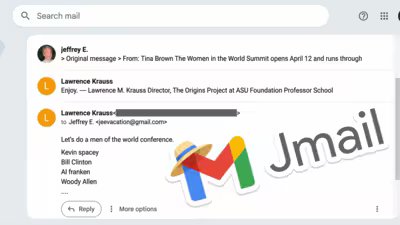
A new web-based tool called Jmail is drawing attention after transforming how users explore the publicly released email archive linked to Jeffrey Epstein. The platform presents tens of thousands of emails in a Gmail-style interface, replacing the fragmented PDFs, scans and text files that previously made the records difficult to navigate, reported The Sunday Guardian.
The emails became public through court proceedings and official disclosures, but their scattered format made meaningful review cumbersome. Jmail aims to make the archive accessible by reorganising the material into a searchable, user-friendly system suited for journalists, researchers and the general public.
Who created Jmail
Jmail was developed by internet artist Riley Walz and software engineer Luke Igel, CEO of AI video editing firm Kino. The creators emphasise that the project does not introduce new material; it compiles emails already released through legal channels into an interface that mimics a standard inbox.
Also Read: Pam Bondi under fire for 6-page letter to Congress with list of names in Epstein files, ‘Reckless and irresponsible’
Explaining the motivation behind the tool, Igel said usability was the biggest challenge: “The emails were just so hard to read,” noting that many files were buried in poorly scanned formats that discouraged deeper investigation.
How the tool works
Jmail presents the archive in a familiar inbox layout with folders such as Inbox and Sent, threaded conversations and keyword search. Users can open messages, follow conversation chains and scan subject lines to track correspondence over time.
The platform uses optical character recognition (OCR) and AI-based text conversion to transform low-quality scans into readable text, improving searchability without adding private or unreleased content.
Also Read: Who is Lesley Groff, the woman mentioned 150,000 times in Epstein files?
What users can do
The interface allows visitors to:
- search names or keywords across the emails
- browse conversations chronologically
- identify messages involving specific correspondents
- explore connections among figures mentioned in the archive
Familiar features such as contact sidebars, subject previews and a “star” function help users highlight notable emails.
While some observers have raised questions about privacy and the ethics of recreating a Gmail-style environment, the creators stress that Jmail simply reorganises public records and does not publish new data.