Feminist Isadora Borges de Aquino Silva of Paraíba, Brazil, doesn’t believe that a male can become female. The 34-year-old veterinary student said so on social media in November 2020. She also posted video remarks by Sydney University emeritus professor Bronwyn Winter: “A person who identifies as transgender retains their birth DNA. No surgery, synthetic hormones, or change of clothes will alter this fact.” Ms. Winter cited Simone de Beauvoir to support her views.
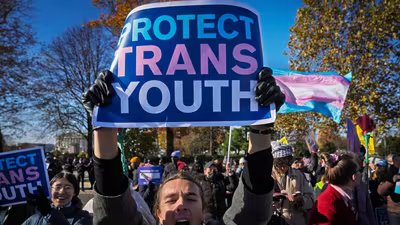
Representative image. (AP)
For posting these opinions, Ms. Silva has been charged by federal prosecutors with the crime of “transphobia.” Her trial is scheduled for Tuesday. If found guilty, she could be fined and imprisoned for up to five years. Even if acquitted, she will face significant legal bills to defend her speech.
The case shows how far Brazil has fallen from the modern liberal democracy it aspired to become when it emerged from dictatorship in 1985. Courts are no longer constrained by the constitution, and the contrarian who questions the judiciary’s version of the truth increasingly risks imprisonment.
Brazil’s Congress has passed no law criminalizing “transphobia.” The Supreme Court did it—by declaration—in June 2019. The high court voted 8-3 to extend the protections of an existing law prohibiting racial discrimination in hiring, housing and public access to homosexuals and transgender people. The law also makes defamation, insults or racial incitement a crime.
It isn’t clear how Brazil’s Supreme Court seized lawmaking and other powers for itself with no pushback from the legislature, which is supposed to discipline rogue justices. One theory is that Congress has been intimidated by a high court ready to use lawfare against any politician who doesn’t get in line.
The Brazilian Supreme Court’s crackdown on expression began after its 2021 decision to vacate on a technicality the 2017 corruption conviction of former President Luiz Inácio “Lula” da Silva. Lula wasn’t exonerated, but the ruling came too late to retry him due to the statute of limitations, clearing the way for the left-wing populist to run again for president in October 2022. He won.
Many Brazilians were angered by the high court’s politicization of justice. They lit up chat groups, social media and independent news platforms with commentary that didn’t exactly flatter the justices.
Justice Alexandre de Moraes headed the electoral tribunal that referees presidential campaigns. Under his leadership, it passed a resolution to criminalize such public criticism, labeling it “misinformation” and “fake news,” and raided homes, froze bank accounts and subpoenaed financial records of Lula opponents. The court ordered social-media companies to block content it didn’t like. When Elon Musk refused to comply, Justice de Moraes shut down X.
In July the Trump administration imposed Magnitsky Act sanctions on Justice de Moraes, who the U.S. Treasury said was “responsible for an oppressive campaign of censorship, arbitrary detentions that violate human rights, and politicized prosecutions—including against former President Jair Bolsonaro.” The justice’s wife, Vivane Barci de Moraes, and her legal-services company, Lex Institute, were also subject to sanctions.
The high court continued the persecution of Mr. Bolsonaro. In September it voted 4-1 to convict him of plotting a coup against Lula and sentenced him to 27 years in prison. In a 452-page dissent, Justice Luiz Fux detailed the myriad ways the court had run roughshod over Mr. Bolsonaro’s rights. The U.S. lifted all of its sanctions in December.
The court has also been plagued by corruption allegations. Take the case of the collapse of the São Paulo-based Banco Master in November. It might look simply like an alleged bank fraud—albeit one that could cost Brazil’s deposit-insurance fund as much as $10 billion. But dig deeper and the de Moraes name emerges. It turns out that the Barci de Moraes Law Firm, owned by Mrs. de Moraes, had a three-year, $24 million contract with Banco Master to provide unspecified services.
Before the bank failed, it tried to get a state-owned bank—Banco de Brasília—to buy it. That never happened because Brazil’s Central Bank President Gabriel Galípolo and his board of governors refused to approve the sale. But phone records indicate that Justice de Moraes initiated multiple phone calls to Mr. Galípolo ahead of the liquidation of the bank. Both the justice and his wife say they’ve done nothing wrong. But it looks bad coming from a court that seems to answer to no one.
Falcón Alves, the law firm representing Ms. Silva, told me that in this case it isn’t disputing the criminality of transphobia. Rather it argues her “statements are opinions expressed in an ongoing philosophical and scientific debate, and don’t amount to hate speech, incitement to discrimination, or violence.” Last month an appellate judge denied a request for an injunction, finding instead, according to her lawyers, indications of a crime. Justice may yet prevail, but it’s a decision that doesn’t bode well for the future of Brazilian liberty.