
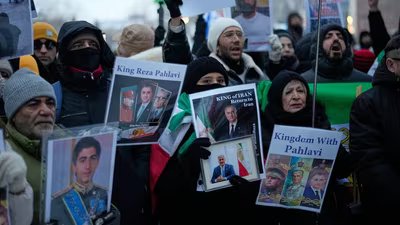
Iran’s exiled crown prince, Reza Pahlavi, on Saturday issued a fresh call for agitation and asked Iranians to return to streets over the weekend at 6 pm as the country reels under intensified anti-government protests, which his previous appeals to the public also played role in. Track Iran unrest updates
Pahlavi urged workers in key economic sectors such as transport, oil, gas and energy to start a nationwide strike to bring the “Islamic Republic and its worn-out and fragile repression apparatus to its knees.”
Also read: What’s behind ‘iconic’ images of women lighting cigarettes with Khamenei’s burning photos
“Also, I ask all of you today and tomorrow, Saturday and Sunday (January 10 and 11), this time, from 6 pm, to come to the streets with flags, images, and national symbols and claim public spaces as your own. Our goal is no longer merely to come to the streets; the goal is to prepare for seizing the centers of cities and holding them,” he wrote in Persian in a post on X (formerly Twitter), as he also announced his homecoming.
Also read: ‘Difference between truth and hope’: Why Owaisi blamed Congress for Umar Khalid, Sharjeel Imam’s jail without trial
“I too am preparing to return to the homeland so that at the time of our national revolution’s victory, I can be beside you, the great nation of Iran. I believe that day is very near,” he wrote. Pahlavi’s family fled Iran months before the Islamic Revolution in 1979 and his father Mohammad Reza Pahlavi was the last monarch if Iran which has been under clerical leadership since his ouster.
The agitation that began last month from a few markets in capital Tehran over economic woes snowballed into a nationwide uprising which has now spread to 512 locations across 180 cities in 31 provinces across Iran, according to US-based Human Rights Activists News Agency (HRANA). Amid simmering tensions, massive crowds of people poured out on streets in major Iranian cities on Thursday, including capital Tehran, following Pahlavi’s call for intensified agitation. The flare up prompted the clerical leadership under Syed Ali Khamenei to snap internet and telephone lines.
Pahlavi on Friday also reached out to United States President Donald Trump and urged him to intervene in the ongoing protests in Iran.
Highlighting the developments in Iran, Pahlavi said that there is not internet or landlines in the country and the protestors were facing bullets. Through a post on X (formerly Twitter), he issued an “urgent and immediate call” for Trump’s support and action.
“Ali Khamenei, fearing the end of his criminal regime at the hands of the people and with the help of your powerful promise to support the protesters, has threatened the people on the streets with a brutal crack down. And he wants to use this blackout to murder these young heroes,” he added.
What is happening in Iran?
At least 65 people have been killed and more than 2,300 detained, according to rights groups, since the agitation began on December 28. Chants of “Death to the dictator” and support for the return of the monarchy under Pahlavi are echoing through Tehran, Mashhad and other major cities amid the ongoing unrest.
Trump and Iran’s Khamenei have been trading barbs as Iran’s Supreme Leader accused Trump of having blood of Iranians on his hands, referring to the 12-day war in June in which, he claimed, over a thousand Iranians were killed.
Trump on the other side warned Iran’s leaders against using lethal force, threatening to strike Iran “very, very hard where it hurts.”